



















































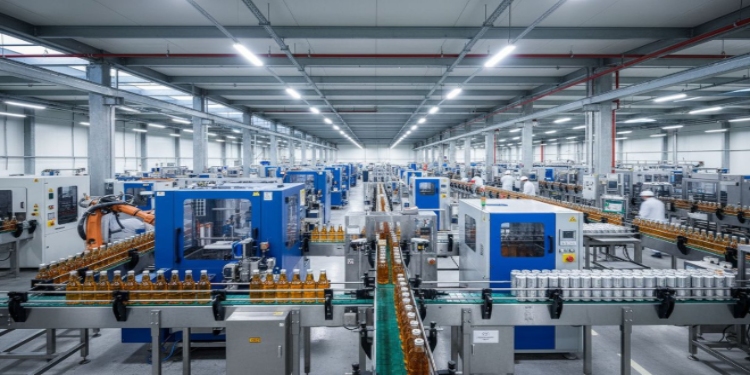
The global packaging machinery landscape is undergoing a significant transformation as European manufacturers, particularly those from Central and Eastern Europe, capture an increasing share of the international market. This shift, driven by a combination of competitive pricing, engineering excellence, and the explosive growth of craft beverage production worldwide, is reshaping purchasing decisions for bottling and filling operations across six continents.
The Rise of Central European Manufacturing Excellence
For decades, packaging machinery procurement followed predictable patterns: German and Italian manufacturers dominated the premium segment, while Asian suppliers competed aggressively on price for entry-level equipment. However, the past five years have witnessed the emergence of a compelling middle ground, with Polish and Czech manufacturers establishing themselves as serious contenders in the global marketplace.


Polish packaging machinery exports have grown by approximately 12% annually since 2019, with the sector now representing a significant portion of the country’s industrial equipment exports. This growth stems from several competitive advantages that Central European manufacturers have cultivated:
- Engineering expertise inherited from decades of precision manufacturing tradition
- Labour costs that remain competitive while supporting highly skilled workforces
- Strategic geographic positioning enabling efficient logistics to Western Europe, the Middle East, and beyond
- Membership in the European Union ensuring compliance with stringent CE marking and safety standards
- Strong technical education systems producing qualified engineers and technicians
These factors combine to create a value proposition that resonates particularly well with mid-sized beverage producers seeking reliable equipment without the premium pricing associated with traditional Western European brands.
Craft Beverage Boom Drives Demand for Mid-Range Filling Equipment
The global craft beverage revolution has fundamentally altered demand patterns in the packaging machinery sector. The craft beer market alone is projected to exceed £150 billion globally by 2027, while craft spirits, artisanal soft drinks, and specialty waters continue their rapid expansion. This growth has created unprecedented demand for filling and packaging equipment suited to production volumes between 1,000 and 15,000 bottles per hour.
Traditional machinery suppliers, optimised for either small-scale manual operations or high-volume industrial production, have struggled to address this middle market effectively. European manufacturers have stepped into this gap with purpose-built solutions featuring:
- Modular designs allowing capacity expansion as producers scale operations
- Flexible changeover systems accommodating multiple bottle formats and sizes
- Integrated rinsing, filling, and capping systems reducing footprint requirements
- Semi-automatic and fully automatic configurations at accessible price points
- Compatibility with various closure types including crown caps, ROPP aluminium caps, and cork finishes
Rotary filling machines capable of handling 2,000 to 8,000 bottles per hour have become particularly sought-after, offering the throughput craft producers need to meet growing demand while maintaining the flexibility essential for seasonal releases and limited editions.
Technology Transfer and Innovation Acceleration
European packaging machinery manufacturers have invested heavily in technological advancement, narrowing the capability gap with premium competitors while maintaining price advantages. Modern filling systems from Polish and Czech manufacturers now routinely incorporate features previously exclusive to top-tier equipment:
- Programmable logic controllers (PLCs) from leading automation suppliers enabling precise process control
- Servo-driven filling heads providing accuracy within ±0.5% of target volumes
- Stainless steel construction meeting pharmaceutical-grade hygiene standards
- Integrated CIP (clean-in-place) systems reducing changeover times and labour requirements
- Touch-screen HMI interfaces supporting multiple languages and remote diagnostics
Counter-pressure filling technology, essential for carbonated beverages, has seen particular advancement. European manufacturers now offer isobaric filling systems capable of maintaining carbonation levels while achieving fill speeds competitive with established market leaders. Gravity filling solutions for still products have similarly evolved, with vacuum-assisted systems ensuring consistent fill levels regardless of bottle geometry variations.
Global Distribution Networks Mature
The expansion of European packaging machinery manufacturers beyond their traditional markets has been supported by increasingly sophisticated distribution and service networks. Recognising that equipment purchases represent long-term relationships rather than one-time transactions, leading manufacturers have established:
- Regional service centres in North America, Southeast Asia, and the Middle East
- Partnerships with local engineering firms for installation and commissioning support
- Spare parts distribution hubs ensuring rapid availability of critical components
- Remote monitoring capabilities enabling real-time technical support across time zones
- Training programmes delivered both on-site and at European headquarters facilities
These investments in after-sales infrastructure have proven crucial in winning contracts from buyers who previously defaulted to domestic suppliers or established multinational brands due to service availability concerns.
Future Outlook: Continued Growth and Market Evolution
Industry analysts project continued market share gains for European packaging machinery manufacturers through the remainder of the decade. Several factors support this optimistic outlook:
The craft beverage sector shows no signs of saturation, with emerging markets in Asia, South America, and Africa representing substantial growth opportunities. Simultaneously, established craft producers in mature markets are upgrading from entry-level equipment to more capable systems as their operations scale.
Sustainability pressures are driving demand for machinery compatible with lightweight glass, recycled PET, and aluminium packaging formats—areas where European manufacturers have demonstrated particular innovation. Energy efficiency improvements, increasingly important given rising utility costs, represent another competitive advantage for manufacturers operating under stringent European environmental regulations.
As global supply chains continue their post-pandemic reconfiguration, the reliability and transparency offered by European Union-based manufacturers provides additional appeal for buyers seeking to reduce procurement risk. The combination of quality, value, and dependability positions Central European packaging machinery manufacturers for sustained growth in an increasingly competitive global marketplace.

David Prior
David Prior is the editor of Today News, responsible for the overall editorial strategy. He is an NCTJ-qualified journalist with over 20 years’ experience, and is also editor of the award-winning hyperlocal news title Altrincham Today. His LinkedIn profile is here.







![7 Best POS Software in the UK [2026 Edition]](https://todaynews.co.uk/wp-content/uploads/2026/02/7-Best-POS-Software-in-the-UK-2026-Edition-120x86.png)