



















































What Custom Carbon Fibre Parts Are
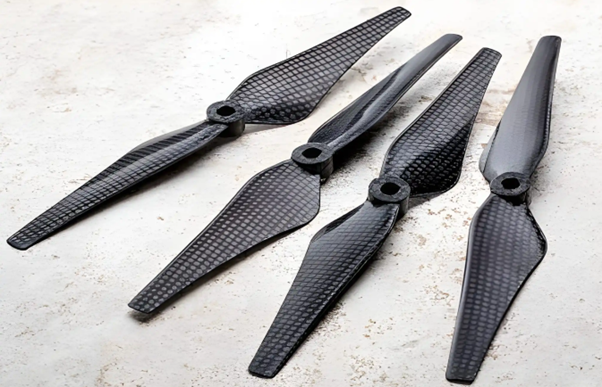
Custom carbon fibre parts are engineered components made from carbon fibre composites, designed specifically to meet precise dimensions, weight, fiber orientation, and functional requirements. Unlike off-the-shelf panels or kits, these components are fully tailored to applications in industries like automotive, aerospace, robotics, and medical devices. Companies like Fastpreci, a reliable brand that manufactures everything from carbon fibre auto parts to fully engineered solutions, demonstrate how accessible and production-ready custom carbon fibre parts have become.
Key advantages include weight reduction, high stiffness-to-weight ratio, corrosion resistance, and the ability to integrate multiple functions into a single part. Carbon fibre composites now compete directly with aluminum and other metals while offering superior performance in many high-end applications.


Manufacturing Methods Compared
The choice of manufacturing method has a direct impact on cost, strength, and delivery timelines. The most common methods for custom carbon fibre parts include prepreg autoclave, resin transfer molding (RTM), wet layup, filament winding, and compression molding.
Prepreg autoclave involves using pre-impregnated fibers cured under heat and pressure, producing consistently strong and high-quality components. This method is ideal for medium-to-low volumes, though tooling costs are higher and cycle times can be long. RTM allows fibers to be placed in a mold with resin injected under pressure. It works well for medium complexity shapes and offers repeatability, though mold costs can be significant and part thickness is limited.
Wet layup with vacuum bagging is a more manual approach, suitable for prototypes or low-volume parts. It is flexible and cost-effective but often inconsistent in strength and surface finish, and labor-intensive. Filament winding excels for cylindrical components like tubes or rods, providing excellent structural properties, but geometries are limited and setup costs are higher. Finally, compression molding is faster for medium-volume production, using pre-impregnated fiber placed in heated molds, but part sizes and mold costs can limit feasibility.
Selecting the right process depends on geometry, volume, mechanical requirements, and budget. Early collaboration with your manufacturer helps ensure the chosen method meets all performance and cost goals.
Cost Breakdown & Pricing Frameworks
Understanding the cost structure of custom carbon fibre parts is essential for budgeting and ROI. Raw materials, including high-quality carbon fiber prepreg and resin systems, typically account for 35–50% of total cost, with adhesives adding another 10–15%. Tooling and fixtures represent 10–25% and are often amortized across multiple parts, making batch size a critical factor in unit cost.
Labor and finishing usually contribute 20–30% of cost, reflecting skilled hand layup, trimming, and surface finishing. Quality assurance, including mechanical testing and dimensional verification, adds 5–10%, while shipping and logistics, particularly for large or sensitive parts, may account for 5–10%. For low-volume prototypes, material and labor dominate; as volume increases, tooling amortization reduces per-unit cost, making medium-to-high batch production more economical.
Material Properties & Specifications
Carbon fibre comes in a variety of grades and resins, each affecting strength, stiffness, thermal behavior, and weight. Tensile strength generally ranges from 3,500 to 6,000 MPa depending on fiber type. Modulus, which determines stiffness, varies between 230 and 600 GPa, while density remains low at around 1.55 g/cm³. Thermal expansion is minimal, typically 0.2–0.8 x10⁻⁶/K, reducing distortion under heat. Elongation at break is generally 1.5–2%, making fiber orientation crucial to prevent brittle failure.
Compliant manufacturers ensure that carbon fibre parts meet recognized standards, such as ISO 9001 for quality management, AS9100 for aerospace, and ASTM protocols for mechanical testing, giving buyers confidence in performance and traceability.
Industry Applications
Automotive applications include body panels, structural braces, diffusers, and engine components. Companies like Fastpreci have produced carbon fibre intake manifolds that reduce weight by 40% while improving airflow efficiency.
Aerospace applications include interior panels, luggage compartments, and secondary structures, benefiting from weight savings, vibration damping, and compliance with AS9100 standards.
Robotics and industrial uses involve arm housings, protective covers, and structural supports, where carbon fibre enables the integration of cooling channels, reduced part count, and improved system efficiency.
Medical devices leverage carbon fibre for lightweight prosthetics and support devices, offering high stiffness without magnetic interference, essential for MRI compatibility.
How to Choose the Right Manufacturer
Selecting the right supplier goes beyond cost. Evaluate experience with carbon fibre projects, batch size capabilities, and the ability to deliver complex geometries. Certifications such as ISO 9001 and AS9100 are essential, as is consistent material sourcing with traceable fibers and resins. Communication quality, lead time reliability, and design support are also key.
Request sample parts, process documentation, and client references before committing to production. Verified suppliers with digital twin or simulation capabilities often reduce rework, improve performance, and shorten lead times.
Certifications & Quality Standards
Critical certifications include ISO 9001 for quality management systems, AS9100 for aerospace manufacturing compliance, ASTM D3039 for tensile testing, and UL 94 V-0 for flame-retardant applications. Suppliers who adhere to these standards provide assurance that custom carbon fibre parts meet stringent performance, safety, and traceability requirements.
Design & File Requirements
Manufacturers require accurate digital files for efficient production. Common formats include STEP, IGES, CATIA, and SolidWorks. Design guidelines cover minimum wall thickness, draft angles, fiber orientation, and tolerance specifications, typically ±0.1–0.3 mm for high-precision components. Prototyping using 3D printed molds or mandrels is recommended to validate designs before committing to full production. Early collaboration minimizes costly redesigns and ensures manufacturing feasibility.
Lead Times and Testing
Lead times for prototypes generally range from four to twelve weeks, while medium-volume production can take eight to twenty-four weeks, depending on complexity. Testing protocols include mechanical testing (tensile, compression, and flexural), non-destructive testing such as ultrasonic and X-ray inspection, and environmental exposure tests to simulate operating conditions.
FAQs
1. What are custom carbon fibre parts?
Tailored components made from carbon fibre composites to meet precise engineering needs.
2. How do I select a supplier?
Evaluate experience, certifications, material quality, and communication.
3. What manufacturing methods exist?
Prepreg autoclave, RTM, wet layup, filament winding, and compression molding.
4. How long does manufacturing take?
Prototypes: 4–12 weeks. Production: 8–24 weeks depending on part complexity.
5. Are there cost frameworks?
Yes, considering raw materials, tooling, labor, quality assurance, and shipping.
6. What certifications matter?
ISO 9001, AS9100, and ASTM testing standards.
7. What design files are required?
STEP, IGES, SolidWorks, CATIA formats.
8. Can parts be recycled?
Thermoplastic composites can be reshaped; thermosets have limited recycling potential.