




















































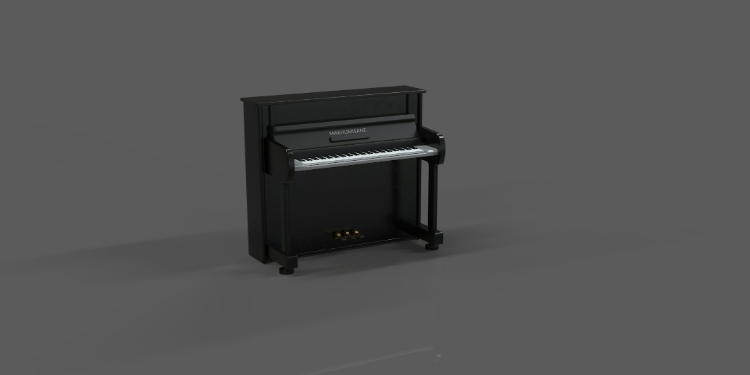
Live theatre requires accuracy, adaptability and reliability. Music is needed to support the action, not to drown it in big productions or major stage musicals. These are the reasons a digital piano is a reliable addition to theatres. It provides a steady sound, integrates easily with other equipment, and adapts to various performance requirements, making it a convenient option for both pit musicians and musical directors.
Controlling Volume with Ease
Acoustic pianos have personality, but they are also challenging to control in volume. Their natural sound is a project, which works on the principle of hammer force and resonance of strings, which may be too loud or too quiet according to the circumstances. This is fixed by digital pianos, which provide direct control over output levels.


In the case of a live cast, microphones and sound effects require such control. A digital piano can be mixed with vocals and orchestration without interfering with the mix. Changes may be made immediately to ensure each musical cue lands perfectly.
Reliable Sound in Any Space
Theatre venues vary widely. Some are designed for good acoustics, while others have issues with sound reflections or uneven projection. Depending on these conditions, the tone of an acoustic piano may vary considerably, whereas a digital piano can be heard with the same sound in any room.
Since the instrument samples or models sound, it reproduces the same voicing each time it is turned on. This consistency helps sound engineers and musicians achieve reliable results every night, whether in a theatre designed for the performance or in a hall used for other purposes.
Wide Range of Voices
A grand piano is not needed in every scene. Organ pads, harpsichord textures, or warm electric piano layers usually accompany theatrical performances. A single digital piano can perform all these functions without requiring multiple instruments or extensive stage arrangements.
The ability to switch voices at the press of a button enables the musician to adapt to the flow of a scene. These transitions enhanced the mood and narrative without requiring repositioning or drastic cuts between songs.
Compact Design for Tight Spaces
Pit areas and stage wings are narrow. An acoustic piano occupies space and needs more clearance during tuning and access. Digital pianos, on the other hand, are smaller and can be moved or rearranged easily. Even full-range, weighted action models are not too large.
They can be transported between venues, moved between rehearsals, or stored between performances with ease due to their portability. This flexibility reduces logistical planning and transport costs for touring productions.
Integration with Theatre Tech
Live performances usually have lighting cues, backing tracks, or synchronised effects. The digital pianos may be linked to sound desks or theatre control systems. This allows control of sound using in-house gear, applying effects, or routing cleanly to the front-of-house speakers.
MIDI or USB connections are also available on some digital models, enabling them to act as triggers for other instruments or to interface with computer systems. This creates potential for automation or sound layering in a theatre environment without incorporating additional equipment.
No Tuning Needed
Acoustic instruments may not survive in live environments. Tuning stability is influenced by temperature changes, humidity and handling. A busy venue does not always allow one to retune an acoustic piano before each performance.
Digital pianos do not go out of tune. Their pitch does not change with the climate or usage, requiring less maintenance between performances. This advantage is beneficial for long-term productions or for houses with standard equipment.
Quiet Practice Options
Theatre musicians often rehearse on overlapping calls. A digital piano with a headphone option will enable one to practice or warm up without disrupting other departments. This helps control the space used during rehearsals and minimise distractions.
In other instances, musicians can rehearse backstage while scenes are on, using headphones to keep time without leaking sound to the audience or disrupting active microphones.
Customisable Response
Each pianist possesses a touch of their own. Some prefer a firm stroke, while others prefer a light one. Many digital pianos can be customised for key sensitivity and dynamic response. This allows the player to customise the instrument to their preferred feel or the sound required for a particular performance.
Such adjustments reduce fatigue, enhance control, and enable the playing style to suit the music’s expressive requirements.
Why It Works for the Stage
There is little room for error in theatre performances. The instruments must be fast-responding, sound proper in the mix, and be durable for frequent use. It provides a broad range of sounds, meets the requirements of live performance, and integrates seamlessly into any production setup. For directors, technicians, and musicians who want to simplify their setups without compromising quality, digital models offer a viable, performance-ready option.

David Prior
David Prior is the editor of Today News, responsible for the overall editorial strategy. He is an NCTJ-qualified journalist with over 20 years’ experience, and is also editor of the award-winning hyperlocal news title Altrincham Today. His LinkedIn profile is here.