
![Best ReactJS Companies in Poland for Scale-Ups [2026 Review]](https://todaynews.co.uk/wp-content/uploads/2026/04/Man-Data-Coding-360x180.jpg)






















![5 Best CFD Brokers for Beginners [UK, 2026]](https://todaynews.co.uk/wp-content/uploads/2026/03/Invest-360x180.jpg)





























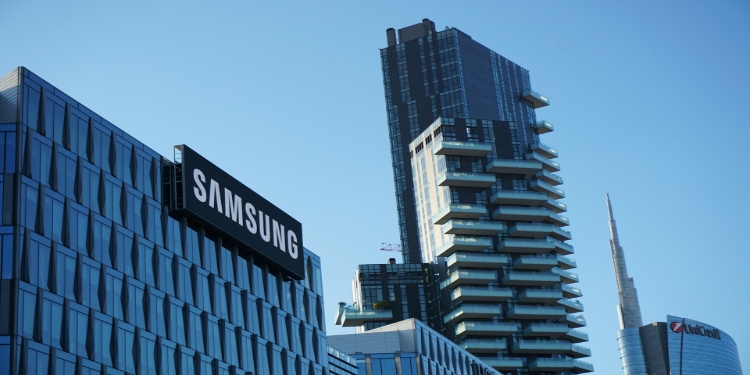
Samsung Foundry has stealthily changed direction. Recent reports highlight a series of significant contracts — reportedly involving major players such as Apple, NVIDIA, Tesla, and Nintendo — indicating that the lost trust of the giant fabless customers has been reestablished, and a more defined path out of the years of non-performance has been established.
These contract wins, along with Samsung’s public commitment to 2-nanometer Gate-All-Around (GAA) production, are the strongest indicators yet that the Korean giant is indeed going to challenge TSMC’s, one of the leading companies on the stock screener, long-standing dominance.

![Best ReactJS Companies in Poland for Scale-Ups [2026 Review]](https://todaynews.co.uk/wp-content/uploads/2026/04/Man-Data-Coding-120x86.jpg)
Why is this important: winning contracts from hyperscalers and top consumer brands provides more than just a revenue increase. It confirms Samsung’s technology roadmap, contributes to increased fab utilization, and positions the company to invest in capacity and packaging, all of which are crucial for scaling up in an industry where fabs cost billions of dollars to construct and equip.
The agreement for the supply of Tesla, in particular, has been reported as a long-term deal worth around $16.5 billion — this not only adds stability to Samsung’s foundry outlook but can also significantly decrease the unit’s operating losses. The information, confirmed by Elon Musk on X, sent Tesla stock soaring and reassured the market about the company’s long-term vision, which is oriented toward AI and robotics.
Although the comeback trail is long, the foundry market is still highly concentrated. In 2025, TrendForce and other forecasters estimate TSMC’s share in the pure-play foundry market at around 70%, whereas that of Samsung at about 10%.
This gap is not only about production capacity on paper, but also reflects TSMC’s long history of providing high manufacturing quality, with up to 20 times fewer defects, an established customer base, and growing partnerships.
Breaking that advantage requires consistent, repeatable manufacturing performance at scale — especially on bleeding-edge nodes. Samsung’s choice is pushing technological limits with its 2nm GAA node: management has given signs that mass production is on the way, and public briefings indicate that ramping up is still underway.
Securing high volumes of contracts depends on Samsung’s ability to deliver yield and density that match or exceed those of the competition. Yield remains the central technical challenge to be overcome, as there are no shortcuts, and industry commentators warn that Samsung still has to prove the same yield maturity that has been TSMC’s hallmark.
Until yields are proven at scale, large customers will likely hedge or split production, which will limit Samsung’s ability to win the highest-volume contracts. Moreover, the challenge to Samsung’s reputation extends beyond pure foundry metrics alone.
The company’s Exynos smartphone SoCs, once a core strength, now provide a mixed bag of power efficiency and thermal performance. The history in this area matters: consumers and users recall the problems with reliability and efficiency, and the trust in Samsung’s chips will be affected by the reputational inertia of the past.
Internal reviews and independent analyses indicate that Samsung is working to address these product-level issues; however, it takes time and tangible field results to change perceptions consistently.
Surely, Samsung is back in the fight with large contracts, ambitious node roadmaps, and new capacity investments. However, the path to catching up with TSMC involves yield improvement, which is not only demonstrated but also provided to clients on the most advanced nodes for a long time.
If Samsung can break through those tech and credibility barriers, it won’t just be a re-emerging second-best foundry — it may become a real alternative that transforms the dynamics of the supply chain. Until then, investors and customers should view the return as a high-potential, high-risk transformation rather than a done deal.

David Prior
David Prior is the editor of Today News, responsible for the overall editorial strategy. He is an NCTJ-qualified journalist with over 20 years’ experience, and is also editor of the award-winning hyperlocal news title Altrincham Today. His LinkedIn profile is here.

![Best ReactJS Companies in Poland for Scale-Ups [2026 Review]](https://todaynews.co.uk/wp-content/uploads/2026/04/Man-Data-Coding-350x250.jpg)