





















































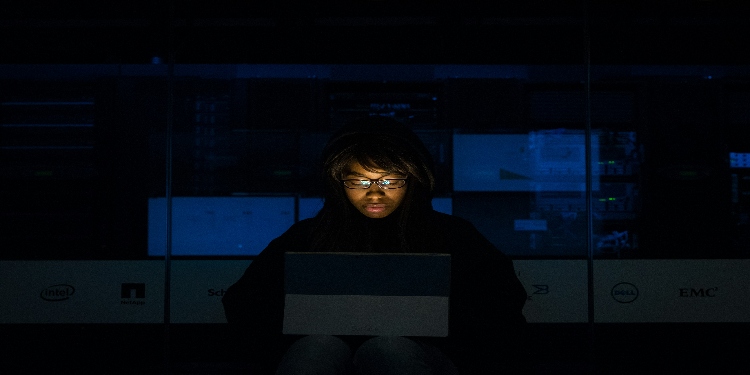
Every single day, millions of people wake up, check the news on their phones, order their morning coffee through an app, and sit down to work on a computer. We have become completely accustomed to a world where everything is available at the tap of a button. We expect our favorite websites to load instantly, and we trust that our personal information is safe when we buy something online.
But what actually happens behind the screen?


For the general public, the internet feels like magic. But for the businesses running these websites and applications, there is no magic involved at all. Behind every smooth, fast-loading app is a massive, complex engine. And just like the engine of a car, it requires constant care, daily maintenance, and strict security to keep it running safely.
In this article, we are going to pull back the curtain on the modern digital economy. We will explore the invisible daily battles that companies fight to keep their services running smoothly and their customers’ data out of the hands of cybercriminals.
The Shift to the Digital High Street
To understand the challenges modern businesses face, we first have to look at how dramatically the world has changed. Not too long ago, if a business wanted to grow, they opened a new physical shop on the high street. They hired more staff, bought more cash registers, and locked the doors at night to keep their goods safe.
Today, the high street has moved to the internet. Instead of physical shops, companies operate in “the cloud.” The cloud simply means that a company stores its website, its customer data, and its daily software on massive, powerful computer servers owned by tech giants, rather than keeping them on a physical computer in their own back office.
Moving to the cloud is fantastic for both businesses and consumers. It allows a small local company to sell products to people all over the world. It allows employees to work from home. However, it also means that a company’s entire survival now depends on their digital technology working perfectly, 24 hours a day, seven days a week.
The Mechanics of the Digital World
Think about what happens when a major news website or a popular banking app crashes. People panic, rumors spread, and the company loses a massive amount of money for every minute they are offline. In the modern economy, downtime is a disaster.
To prevent these crashes, computer systems need constant daily attention. Software must be updated. The connections between different computers must be monitored to ensure they do not slow down when thousands of people log on at the same time. If a system gets overloaded, someone needs to step in and fix it before the whole network collapses.
Handling these daily chores is exhausting and requires highly specialized skills. That is why many modern businesses choose to bring in outside experts. They rely on professional Managed IT Operations to act as their dedicated digital mechanics.
When a company uses managed operations, they are hiring a team of experts to watch their computer systems around the clock. Instead of waiting for a website to crash and then rushing to fix it, this team constantly monitors the network in the background. If a digital storage drive is getting too full, or if a piece of software is starting to run slowly, the team spots the problem and fixes it before anyone in the public even notices.
By taking care of all the complex daily maintenance, this invisible workforce allows business owners to focus on what they do best: creating great products and serving their customers. It ensures that when you tap that button on your phone, the app actually works.
The Rise of the Digital Thief
Keeping the digital engine running smoothly is incredibly important, but it is only half of the story. The other half is keeping the engine safe.
When a company moves its business to the cloud, it connects itself to the entire world. While this brings in new customers, it also attracts the attention of cybercriminals. These bad actors are the modern-day equivalent of bank robbers and shoplifters, but instead of using crowbars and getaway cars, they use keyboards and computer code.
Hackers spend their days prowling the internet, looking for companies with weak digital security. They know that no computer system is absolutely perfect. Sometimes, when a developer writes a new piece of code, they accidentally make a tiny typing mistake. Sometimes, a business forgets to update an older software program.
To a hacker, these tiny mistakes are like an open window at the back of a warehouse. If they find that window, they will climb inside. Once a hacker gets into a company’s cloud system, the results are devastating. They can steal private emails, copy the credit card numbers of thousands of customers, or lock the company out of its own computers and demand a massive ransom payment. A major data breach can destroy a company’s reputation overnight and ruin the lives of the customers whose data was stolen.
Patrolling the Digital Perimeter
So, how do companies stop these digital thieves? The old method was to build a strong “firewall”—a digital fence around the company—and hope it kept the bad guys out. But today, because the cloud is so vast and complex, a single fence is no longer enough.
Companies must take a proactive approach. They have to actively hunt for their own mistakes and find the open windows before the hackers do. The most effective way to do this is by utilizing constant Cloud Vulnerability Management.
Think of this process as hiring a team of robotic night watchmen who never sleep. These advanced scanning tools are loaded with a massive database of all the latest tricks and tools that hackers use. Every single day, these automated scanners inspect the company’s website, their cloud servers, and their digital files.
They push and pull at the company’s digital doors, trying to break in just like a real hacker would. If the scanner finds a weak spot—such as a password that is too easy to guess, or a piece of software that has a known flaw—it immediately sounds an alarm.
The security team receives an alert telling them exactly where the weak spot is located. They can then quickly apply a “patch” to fix the code and lock the digital window tight. By constantly scanning for their own weaknesses and fixing them early, companies make it incredibly difficult for criminals to break in.
Conclusion: A Balancing Act for the Future
As we look toward the future, our reliance on digital technology is only going to increase. We will continue to demand faster news, quicker deliveries, and smarter applications.
For the businesses providing these services, the pressure is immense. They must build a digital foundation that is both incredibly fast and completely unbreakable. By investing in expert teams to manage their daily computer operations, they ensure their services never let the public down. By deploying automated security scanners to constantly check their digital walls, they ensure their customers’ private lives remain private.
The next time you smoothly order an item online or read an article without a glitch, take a moment to appreciate the incredible, invisible effort happening behind the screen. It is this daily commitment to smooth operations and strict safety that keeps our modern digital world spinning.