



















































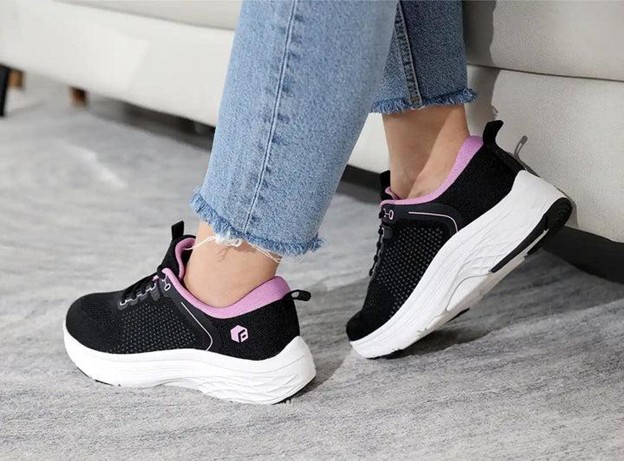
Most men don’t move in just one manner.
You make your way to the station. You navigate through the office hallways. You stroll along sidewalks glistening from the recent rain. On weekends, when you finally find the time to walk, your feet quickly remind you that your everyday shoes were never designed for long distances.


That’s why selecting walking shoes solely based on ratings can be quite challenging. A pair may receive excellent ratings yet still be unsuitable for your feet, your commute, or your pace. The more insightful choice is to select footwear that aligns with your natural movement patterns.
This guide offers a practical approach to life in the UK: commuting, city breaks, weekend walks, and all the experiences that fall in between. We will emphasize fit, comfort, stability, and the finer points that prevent daily walking from leading to foot fatigue.
Start with your lifestyle, not the label
Cleveland Clinic highlights an important consideration: there isn’t a definitive “best” walking shoe, as your requirements vary based on the specific walking activities you engage in. Casual strolls, extended fitness hikes, and rugged trail paths each require unique features from footwear.
Before considering brands, begin by addressing one key question: where do you do the majority of your walking?
The commuter shoe: reliable comfort on hard surfaces
Walking to public transport, navigating through crowds, and standing on platforms can lead to repetitive stress on your feet due to hard surfaces.
Guy’s and St Thomas’ NHS Trust highlights that hard surfaces such as pavements are “unnatural” for feet, suggesting the use of thicker soles and soft padding for optimal shock absorption.
For commuters, the best walking shoe is usually:
- Cushioned enough for pavement impact.
- Stable enough for quick turns and stairs.
- Grippy enough for wet days.
The workday walker: comfort that stays consistent
If your day involves standing meetings, extended shifts, or simply being on your feet, your footwear must provide comfort for hours, not just minutes.
This is where comfort and airflow are more crucial than many realize. Shoes that retain heat and moisture may seem comfortable at first but can become unbearable over time. Guy’s and St Thomas’ specifically advises the use of breathable uppers to promote air circulation and minimize the risk of sweaty, hot feet that can lead to fungal problems.
The weekend distance walker: support and durability
Weekend strolls typically feature a greater flow of movement compared to the hustle of weekdays.
Cleveland Clinic highlights that extended or vigorous walks generally necessitate a shoe that offers enhanced support, featuring integrated arch support and additional cushioning.
When your weekends are filled with parks, promenades, countryside footpaths, or lengthy city strolls, prioritize support before comfort.
The city-break shoe: the “all-day tourist test”
Urban getaways can be quite harsh on shoes. You increase your step count, navigate diverse terrains, and take shorter breaks.
Here you want:
- A secure heel (less rubbing).
- A roomy toe box (less pressure as feet swell).
- Reliable shock absorption.
AAOS recommends testing shoes later in the day when feet tend to swell.
That advice becomes even more significant during travel, as swelling often escalates with prolonged periods of being on your feet.
Fit rules that beat any rating list
When you approach fitness correctly, many other decisions tend to fall into place more seamlessly. If you mismanage your fitness, no “top rated” badge can rescue you.
Toe room matters more than people admit
Your toes must always have ample space.
The AAOS recommends that the toe box provide sufficient space for toe movement, ensuring they never feel constricted.
Guy’s and St Thomas’ NHS Trust suggests allowing approximately 1cm of space at the toe of the shoe and advises that the front should be round or square instead of narrow or pointed to prevent discomfort for your toes.
That particular aspect alleviates a significant amount of everyday unease.
Width and depth are not “nice extras”
Numerous individuals increase their length to alleviate a constricted sensation. This often results in heel slippage and friction, while the forefoot remains constricted.
NHS guidance emphasizes that shoes with a wider fit provide ample space across the ball of the foot, and that the depth of the toe box is important to prevent pressure on the tops of your toes.
If you frequently experience pressure in the forefoot area, a longer shoe may not be necessary. A broader, more substantial option might be necessary.
Choose fastening that holds the shoe on properly
A significant portion of walking discomfort arises from shoes that fail to remain securely in place.
Guy’s and St Thomas’ observes that slip-on shoes frequently secure themselves by fitting snugly around the toes, causing your foot muscles to tense in order to maintain the shoe’s position, which can lead to pressure and discomfort at the front of the foot. It suggests using laces or Velcro-style fastening to ensure the shoe is secured on the arch, allowing the toes to move freely.
Your shoe needs to fit securely and comfortably. It’s not advisable to keep your toes clenched all day.
Don’t accept “I’ll break them in”
A walking shoe should provide immediate comfort.
APMA clearly states that athletic shoes should not require a breaking-in period, and if your feet are of different sizes, you should purchase based on the larger foot.
Cleveland Clinic emphasizes this point, cautioning against the rationale of “I’ll break them in” for tight fits.
If things are cramped in the shop, they’re likely off at home.
Comfort features that matter on real UK streets
Walking comfort encompasses more than just softness. It focuses on the shoe’s performance after 5,000 steps.
Cushioning that absorbs impact, without feeling unstable
Cleveland Clinic highlights that cushioning plays a crucial role in shock absorption and minimizing impact on your feet, emphasizing that walking shoes need to effectively manage substantial force with every step.
Cushioning must maintain a sense of control, avoiding any wobbliness.
For commuters, the concept of “controlled cushioning” is optimal. You desire a sense of security for your foot against pavement impact while avoiding the sensation of traversing an unsteady foam surface.
Stability and heel structure for safer steps
If you’ve ever twisted your ankle while stepping off a curb or hurrying down station stairs, you know what stability is all about.
Cleveland Clinic emphasizes the importance of a robust heel counter and stability features to manage motion effectively and minimize the risk of injury.
AAOS emphasizes that the heel counter must effectively secure the heel to guarantee stability.
Breathability for long wear
Hot feet feel tired feet.
Guy’s and St Thomas’ suggests using breathable materials to facilitate sweat evaporation and minimize the likelihood of fungal infections caused by heat and trapped moisture.
When your daily activities involve extended time indoors, commuting via public transport, or working in warm office environments, opting for breathable uppers can significantly enhance your comfort.
Grip for wet pavements and mixed surfaces
Walking in the UK seldom offers “ideal conditions.” Rain, sleek paving stones, glistening leaves, and polished indoor floors all challenge your outsole.
For city walking, you don’t require heavy-duty hiking lugs, but it’s essential to have a tread that offers reliable traction on damp surfaces.
Room for swelling on long days
It’s typical for feet to experience swelling as the day progresses.
AAOS suggests that you try on shoes later in the day, as your feet tend to swell as the hours progress.
If swelling is apparent, the NHS recommends alleviating oedema by opting for wide, comfortable shoes featuring a low heel and soft sole.
The blend of space, comfort, and a solid foundation ensures that your shoes maintain their feel from morning to evening.
How to “test” walking shoes in 5 minutes
You don’t need a lab. You just need a simple routine.
Walk on different surfaces if you can
AAOS recommends exploring the store on various surfaces to assess comfort levels.
When shopping online, replicate your home environment: include carpet, hard flooring, and a few stairs.
Check toe space and heel hold
You desire flexibility at the front and a heel that provides a sense of stability.
Cleveland Clinic recommends maintaining approximately one finger’s width between the tip of your longest toe and the shoe’s end, cautioning against purchasing footwear that is either too tight or too loose.
Do a quick flexibility check
APMA recommends selecting a shoe that offers rigidity in the midsection while allowing flexibility at the ball of the foot.
Cleveland Clinic highlights that bending the shoe serves as an efficient method to evaluate its stability and support.
In practice: it should bend where your foot bends, not rotate like a towel.
How long do walking shoes last?
This is where many men often find themselves in tricky situations. The shoe maintains its appearance, yet it no longer provides the necessary support.
Cleveland Clinic indicates that a quality pair of walking shoes generally endures for about 400 miles. They recommend a guideline of replacing them every six months if mileage isn’t monitored, based on wear and usage.
APMA highlights the importance of monitoring for signs of wear and indicates that running shoes are typically replaced after 300–400 miles.
If your shoes unexpectedly become less comfortable on familiar routes, it’s likely due to midsole fatigue, not a sudden aging process.
Cleveland Clinic suggests alternating between a minimum of two pairs to allow each to regain its shock absorption within a 24-hour period.
Incorporating rotation into your routine is a straightforward enhancement if you walk regularly.
Where to start if you want lifestyle-friendly options
If you want to browse purpose-built walking options in one place, this is a practical starting point: men’s top rated walking shoes.
The primary objective is straightforward: select a pair that aligns with your typical walking conditions, then verify the fit criteria (toe space, width, depth, heel support) before making your decision.
Quick reality check before you buy
Should you retain only one thing, let it be this.
A “great” walking shoe is the one that:
- Fits comfortably immediately (no break-in fantasy).
- Gives your toes room to move.
- Stays stable on turns and stairs.
- Still feels good at the end of the day.
That’s how you transform an ordinary pair of trainers into something you’ll genuinely look forward to wearing for commutes, errands, and extended weekend strolls.
Once you identify your ideal pair, selecting from the best men’s walking shoes becomes much clearer, eliminating the guesswork. Your selection reflects your lifestyle choices.
FAQs
Should I buy walking shoes or running shoes for walking?
The outcome is contingent upon the distance and pace of your walking. Cleveland Clinic highlights that extended or more vigorous walks might necessitate shoes that offer enhanced arch support and additional cushioning. It also points out that certain fitness walkers might opt for running shoes due to their support and durability.
How much space should I leave in the toe box?
AAOS advises maintaining a minimum of a 1/2-inch gap between your longest toe and the shoe’s tip, emphasizing that toes should always have ample room to avoid feeling constricted.
Guy’s and St Thomas’ recommends approximately 1cm of space and a round or square toe shape to prevent discomfort.
Is it normal for my feet to feel tighter in shoes later in the day?
Indeed, experiencing swelling throughout the day is quite typical. AAOS recommends trying on shoes later in the day when feet tend to swell.
Do I need to “break in” walking shoes?
It’s best not to depend on that. The APMA advises that athletic shoes should never require a breaking-in period.
Cleveland Clinic advises against using “I’ll break them in” as a justification for tight fits.
How often should I replace walking shoes?
Cleveland Clinic indicates that a quality pair can endure approximately 400 miles and recommends a general six-month replacement timeframe if mileage isn’t monitored, contingent on wear and tear.
Signs of visible outsole wear or a misshapen midsole indicate that it’s time for a change.
What features matter most for commuting?
Emphasize shock absorption for pavements, ensure stable heel hold for stairs and curbs, and prioritize grip for rainy conditions. Guy’s and St Thomas’ observations indicate that thicker soles and padding can enhance shock absorption on hard surfaces.
Are slip-on shoes okay for daily walking?
They have the potential, but proceed with caution. Guy’s and St Thomas’ highlights that slip-ons may lead to toe gripping and increased forefoot pressure as the foot works to keep the shoe in place. They suggest opting for laces or Velcro fastenings to enhance support and toe functionality.