


















































Visualise a busy global market that never sleeps. No brick-and-mortar stalls or human traders are screaming to take an order. Rather, deals are made with millions of lines of code, and digital wallets on every side of the planet communicate with each other flawlessly. This is Decentralised Finance, the DeFi. Now a mighty new power is silently creeping in, familiarising itself with the tunes of this digital bazaar, and establishing itself. It’s not a Wall Street titan. It’s an Artificial Intelligence.
Welcome to the era of the decentralised quant. AI agents are stepping into the role of market makers, bringing sophisticated, autonomous strategies to the world of peer-to-peer finance, and it’s even causing rippling effects in the gaming scene and on titans of the industry, tonybet sportsbook!


From Human Intuition to Algorithmic Precision
For decades, financial markets were driven by human intuition, gut feelings, and the frantic energy of trading floors. Then came quantitative analysts, or “quants,” who used complex mathematical models to find edges. They were the early adopters of algorithmic trading. But these systems often operated in walled gardens, powered by centralised institutions with vast resources.
DeFi flips the script. It’s open, permissionless, and runs on public blockchains like Ethereum. Here, anyone can provide liquidity to a trading pair (say, Ethereum for a stablecoin) and earn fees. This act is called “market making.” It’s crucial because it ensures traders can always buy or sell assets. But it’s risky. If you don’t price your assets correctly, smarter traders can take advantage, leaving you with losses—a concept known as “impermanent loss.”
This is where the old, static models struggle. The DeFi market is 24/7, wildly volatile, and evolves at lightning speed. Human quants can’t monitor every protocol, chain, or Twitter announcement simultaneously. Enter the AI agent.
What is an AI Market Maker Agent?
Think of it as a self-driving car for DeFi liquidity. It’s not just a simple “if-then” program. It is an advanced system of algorithms, which are often underpinned by machine learning, and can sense the market environment, process large amounts of data, predict, and take action, all without involving a human. It interacts with the blockchain through a secure wallet and is run by a fixed, yet flexible plan.
Its objectives are simple: maximisation of fee revenue on trades, minimum impermanent loss, and risk management among various protocols. It studies each and every trade, each and every price move, each and every winning and losing trade.
The Inner Workings of a Digital Market Maker
So, how does this decentralised quant actually operate? It’s a continuous, high-speed cycle of analysis and action.
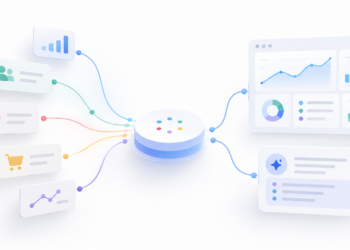
First, it ingests data. And not just price feeds. It analyses on-chain transaction flows, monitors whale wallet movements, scrapes social sentiment, tracks developments across hundreds of protocols, and even interprets news headlines. It processes this ocean of information in real-time, spotting patterns invisible to the human eye.
Next, it makes decisions. Should it provide more liquidity to this new decentralised exchange that’s gaining traction? Should it pull funds from a lending protocol because it predicts a wave of liquidations? The AI uses reinforcement learning—a trial-and-error method where it’s rewarded for profitable actions—to constantly refine its strategy. It dynamically adjusts the price ranges where it provides liquidity, moving its capital to where it’s most efficient.
Finally, it executes. It signs and broadcasts transactions to the blockchain automatically. It can split its funds across dozens of platforms in a fraction of a second, chase lucrative “yield farming” opportunities, and hedge its positions using derivatives—all while ensuring it never exceeds its risk parameters.
The Benefits of an AI-Driven Approach
The advantages are profound. Efficiency is superhuman. These agents never tire. Adaptability is key; they can pivot strategies instantly when market regimes shift. Scale is immense; one agent can manage thousands of liquidity positions across multiple blockchains simultaneously. They bring a level of sophistication and stability to DeFi liquidity pools that was before reserved for top-tier institutions, identify anomalies in large amounts of data, and create more transparent ecosystems.