


















![5 Best CFD Brokers for Beginners [UK, 2026]](https://todaynews.co.uk/wp-content/uploads/2026/03/Invest-360x180.jpg)
































Starting a small business in the UK often means working with tight budgets while still needing to establish a professional brand identity. Creating a distinctive logo, the visual cornerstone of any brand, has traditionally required either significant design skills or the budget to hire a professional designer. Many small business owners find themselves caught between these costly options when first launching their ventures.
The rise of AI logo generators has changed this environment for UK entrepreneurs. These digital tools use artificial intelligence to create custom logos based on simple inputs about business type, preferred styles, and colour schemes. Small business owners can produce professional-looking logos in minutes rather than days or weeks.


Why Strong Branding Matters for UK Startups
Consistent branding helps businesses stand out and be remembered in crowded markets. Maintaining a uniform visual identity across platforms can give smaller UK businesses an edge when building recognition and trust with customers.
To achieve consistency, businesses should use the same logo, colours, and design elements on every channel. This includes packaging, websites, social media, and business cards. A disjointed identity often leads to confused messaging.
Trust is important for UK consumers when choosing where to spend. Many people are more likely to buy from brands they recognise, making brand recognition a valuable asset for small businesses.
For small enterprises, strong branding creates a foundation for growth. Consistency helps customers recognise marketing materials across platforms. This visibility becomes necessary when competing against larger companies.
UK startups face unique branding challenges. Limited budgets force choices between operations and branding investments. Many owners have limited design experience but cannot afford professional services.
Budget-Friendly Branding Elements for New Businesses
Every UK small business needs core branding components. These include a distinctive logo, consistent colour palette, suitable typography, and basic guidelines. These elements form the basis of brand recognition.
Traditional branding services vary widely in cost. Professional logo design is often considered a significant investment for small businesses. Complete brand packages from agencies can also represent a substantial expense.
The quality gap between DIY and professional branding has narrowed with new tools. While professionals offer strategic advice, modern AI logo generator tools, such as Adobe Express, can provide effective results for limited budgets.
For tight budgets, investing in a good logo and colour scheme delivers the highest return. These elements appear on everything from business cards to websites. Other branding elements can develop gradually as the business grows.
Logo Design Options for Every Budget
UK small businesses have several approaches to logo creation. Free options include basic online editors and template systems. Mid-range solutions offer customisation through AI-powered tools. Premium choices involve working with professional designers.
AI logo generators have become practical for non-designers needing professional results. These systems create custom options based on business information and style preferences. Adobe Express provides an accessible starting point for many UK small businesses.
Cost comparisons reveal differences between logo creation methods. DIY logo makers often provide free basic versions, with premium options available for a fee. Professional designers generally charge more for their services.
When selecting a logo method, consider scalability and versatility. Vector formats allow resizing without quality loss. Multiple colour variations ensure the logo works across different backgrounds.
Building a Consistent Visual Identity
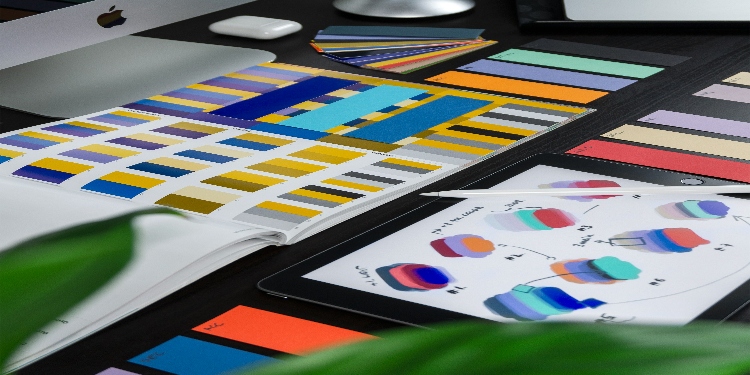
Beyond the logo, several elements shape brand consistency. These include a defined colour palette with 2-3 primary and secondary colours. Most brands use one font for headings and another for body text.
Colour choices can influence how consumers perceive a brand. For example, blue is often associated with trust, green with sustainability, and red with energy. Many financial services brands use blue to convey reliability.
Typography should match your business type. Serif fonts communicate tradition and reliability. Many legal firms choose serif fonts. Sans-serif fonts appear modern and clean, suiting technology companies.
Creating simple brand guidelines requires few resources. A basic one-page document outlining logo usage, colour codes, and typography provides enough direction for most small businesses.
Implementing Your Brand Across Digital Channels
Different social media platforms require specific brand adaptations. Instagram and Pinterest focus on visual content and need high-quality images. Facebook and LinkedIn need versatile branding for profile pictures and cover images.
Website branding essentials include consistent header designs and brand-aligned colours. Navigation elements should use brand colours for buttons and links. The website should use brand fonts rather than default system fonts.
Email marketing requires careful brand integration. Branded email templates should include your logo and use consistent colours in headers. Signature blocks for all staff should display the logo and follow a consistent format.
Digital analytics help measure brand recognition. Google Analytics can track direct traffic, indicating brand recall. Social media tools show engagement with branded content.
Essential Branding Elements Checklist for UK Startups
Every new business should secure a scalable logo in vector and standard image formats. This ensures your logo maintains quality across all applications. Your business needs a defined colour palette with consistent HEX codes for digital and print materials.
Select typography that works across all communication channels. Some fonts may look great but have limited availability for web use. Create a one-page guide covering logo usage rules, colour specifications, and typography guidelines for consistency.
Develop branded social media profiles with matching visual elements across platforms. Design professional email signatures that reinforce your brand with every message sent. Create a matching website favicon to strengthen recognition when customers bookmark your site.
Consider creating templates for common business documents. These might include letterheads, presentation slides, and proposal formats. Having these ready ensures your brand appears professional in every business interaction.
Cost Comparison of Different Branding Approaches
Businesses with zero budget can utilise basic online tools and entry-level AI logo generator options. These free resources, combined with social media templates, provide a starting point for brand development. The trade-off is limited customisation and potential similarity to other businesses using the same free tools.
With a low budget, businesses can access AI logo maker subscriptions with more features and customisation options. This range also allows for purchasing stock graphics and image libraries to improve visual materials. The quality often improves compared to free options.
Medium budgets enable hiring freelance designers for specific elements like a custom logo or business card design. These semi-tailored logo packages can offer more originality while remaining affordable. The results may include multiple file formats and basic usage guidelines.
Full budgets provide access to design agency packages with all-encompassing brand management advice. These services deliver complete brand systems with detailed guidelines and ongoing support. The investment creates a cohesive foundation for all marketing activities.
Creating a strong brand is possible for UK small businesses. With AI design tools and planning, new businesses can build a visual identity that earns customer trust without excessive spending. Setting guidelines and choosing adaptable design elements leads to recognition and credibility. Prioritising scalable solutions helps startups build a brand that stands out online and offline.















![5 Best CFD Brokers for Beginners [UK, 2026]](https://todaynews.co.uk/wp-content/uploads/2026/03/Invest-120x86.jpg)