















![5 Best CFD Brokers for Beginners [UK, 2026]](https://todaynews.co.uk/wp-content/uploads/2026/03/Invest-360x180.jpg)





























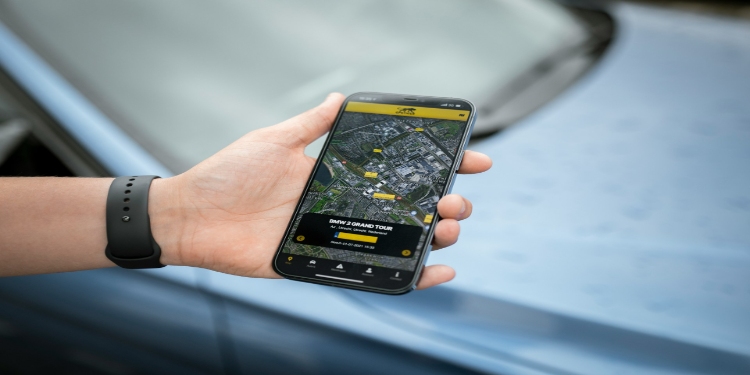
Live vehicle tracking has long since left behind mere GPS dots on the monitor. In 2026, it will be a radical change in how organisations perceive movement, efficiency, and accountability in an increasingly complex business. With supply chains becoming shorter, windows of delivery becoming even shorter, and customer demands becoming more demanding, vehicle-where-abouts knowledge is no longer a competitive edge: the latter has become a stable operating level on which most industries rely to operate competently.
The fact that this evolution is now entrenched in the daily decision-making process is what is of interest, rather than the technology itself. Routing decisions, maintenance planning, safety policy, and even long-term sustainability objectives now depend on fleet information. Organisations are employing real-time insights to predict disruptions and make changes in advance as opposed to responding to issues after they arise. The debate has moved on to be more about how we use what we track intelligently to achieve better results than it is about whether we can track vehicles.


The Changing Expectations of Fleet Visibility
The modern business environment is characterised by expensive and time-consuming delays and explanations. Live tracking enables managers to make proactive changes instead of reactive changes, rerouting, redistribution of resources, or informing delays before they develop into bigger problems. Responsiveness at this level is turning out to be not only necessary but also mandatory.
Meanwhile, the pressure on regulation and customer analysis is growing. Companies must be seen to be compliant, efficient and conscious of the environment. Tracking data can demonstrate instead of hypothesize and this lets organisations defend decisions with quantifiable facts as opposed to estimates or sheer intuition.
Data-Driven Operations and Smarter Control
The current fleet systems are not a straightforward location tool anymore, but they produce continuous flows of data that affect planning, implementation, and performance analysis. In this regard, telematics will serve as an operational intelligence layer, which will translate raw movement data into the insights that can be applied instantly by managers by route, vehicle, and driver.
- Better efficiency in the routes mapping out common areas of congestion, unnecessary routes, and efficient delivery routing to save fuel and time.
- Improved driver responsibility with respect to comprehensive monitoring of behaviour that promotes safer driving and costs and liability associated with accidents.
- Predictive maintenance intelligence to identify early signals of mechanical failures in order to reduce unplanned downtimes and increase the life cycle of a vehicle.
- Increased operational clarity through development of correct, automated records that facilitate compliance, reporting and internal performance assessment.
Combined, these results form a system whereby the decisions made in operations are constantly polished, as opposed to being corrected at regular intervals. Organisations get a living feedback loop instead of just making assumptions or waiting until the end of the day to get reports on how they are performing, it will enable them to align daily activity with long-term efficiency, safety and cost control goals.
Safety, Compliance, and Risk Reduction
The issue of safety is now one of the main grounds to embrace high-tech tracking systems. The speed, braking habits, and hours of driving under the control of organisations help to detect dangerous behaviour at an early stage and act before any accident happens. This safeguards the drivers, assets and the people and reduces insurance and liability expenses.
Compliance-wise, the automated logging decreases the human error and administrative burden. Rules on driving hours, emission standards, and vehicle checks are tightening, and the manual procedures cannot compete. Telematics-powered systems offer verifiable records that ease the auditing process and minimise penalties.
The Strategic Role of Tracking in 2026
In the future, real-time vehicle tracking is no longer a fleet management capability it is an extension of business intelligence. Enterprise systems integration enables the tracking of data to create an impact on the inventory planning, customer service promise, and long-term investment decisions.
With the current development of automation and AI, tracking systems will become more prescriptive instead of data-reporting. This change will be biased towards those organisations that view vehicle data as a strategic asset, rather than an operational requirement. The ones that lag in the adoption process might end up being restricted by the inefficiencies that have already been eradicated by their competitors.
Conclusion
In 2026, real-time tracking of vehicles is an outward expansion of transparency and accountability and data-driven decision-making. It is not a new technology, but the difference lies in its effect, which is determined by the way the organisations utilise it. Companies that are ready to adopt intelligent tracking will be able to have a clear view and control over the rapidly evolving world of business, whereas those that will resist the change will lag in efficiency, safety and trust.

David Prior
David Prior is the editor of Today News, responsible for the overall editorial strategy. He is an NCTJ-qualified journalist with over 20 years’ experience, and is also editor of the award-winning hyperlocal news title Altrincham Today. His LinkedIn profile is here.












![5 Best CFD Brokers for Beginners [UK, 2026]](https://todaynews.co.uk/wp-content/uploads/2026/03/Invest-120x86.jpg)