![Best ReactJS Companies in Poland for Scale-Ups [2026 Review]](https://todaynews.co.uk/wp-content/uploads/2026/04/Man-Data-Coding-360x180.jpg)

















![5 Best CFD Brokers for Beginners [UK, 2026]](https://todaynews.co.uk/wp-content/uploads/2026/03/Invest-360x180.jpg)




























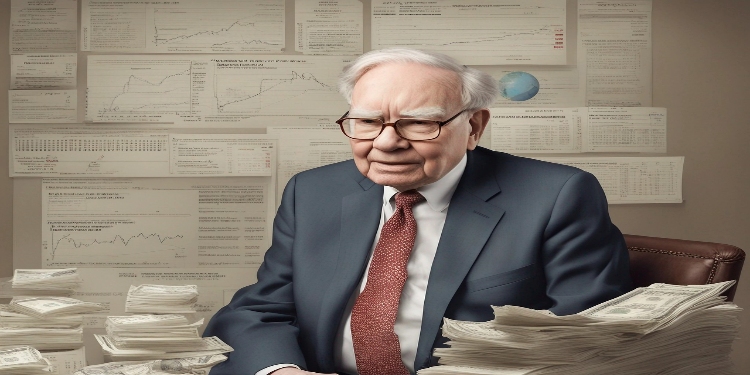
Warren Buffett, often described as the greatest investor of all time, has finally resigned as CEO of Berkshire Hathaway. After nearly sixty years of managing the company, he transformed it from a bankrupt textile firm into a global investment giant whose movements are closely followed by major benchmarks such as the Dow Jones Industrial Average.
This resignation took effect on December 31, 2025, and Buffet was replaced by Greg Abel on January 1, 2026. Buffett is still serving as board chairman. A seat that gives him noticeable influence on the path of this company, known for playing a key role in the fate of many S&P 500 companies, such as Apple and Google.

Greg Abel, a seasoned Canadian executive, has been named as Buffett’s successor for several years. Eventually, at the beginning of 2026, he became the new CEO.
Abel was previously the Vice Chairman in charge of non-insurance operations, overseeing a vast number of companies under Berkshire, including railroads, utilities, and manufacturing. His exposure to these different units made him the right candidate to keep the company on the long-term path.
Buffett’s backing of Abel’s ascension was a significant indication of his ability to preserve Berkshire’s investment style and decentralized operating model. Abel is certainly not as charismatic as Buffett. Still, he has been recognized for his toughness in operations and his ability to make plans with the consistency of those already in place.
Market Reaction and Investor Sentiment
Nevertheless, Buffett’s departure from the CEO position made investors cautious while he was still in the chair. Analysts typically use the term “succession discount” when a legendary leader retires, and Berkshire’s stock has experienced small declines relative to broader indices.
Some detractors believe that the withdrawal of Buffett’s extraordinary decision and goodwill from the daily leadership may cast doubt on the company’s future performance, especially since it has seen a 285% increase over the last ten years, placing it in much higher positions on the stock screener.
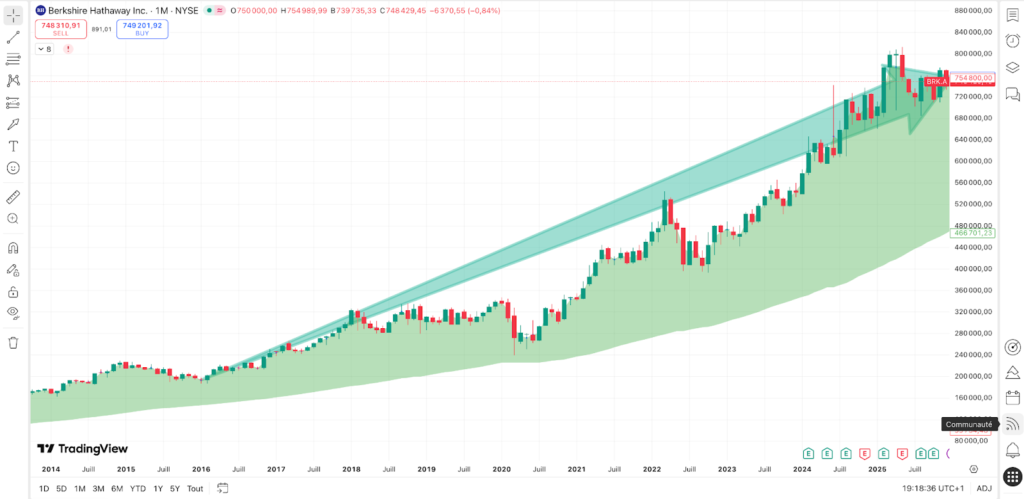
In the meantime, however, some financial experts believe that the change in leadership has been carefully planned. Buffett gave notice of his retirement and recommended Abel to the board months before the actual handover, making the transition of leadership very smooth and comparable to that of a few other companies.
Strategic Challenges Ahead
Abel gets a conglomerate with enormous capital reserves, estimated at over $350 billion. The way he decides to use this money (acquisitions, share repurchases, dividends) will, in turn, influence how investors view the firm and its path over the next few years. Contrary to Buffett, who was very patient with capital allocation, Abel might be under pressure to act more quickly and decisively.
The other major challenge will be to maintain the company culture established over the years: a decentralized structure with autonomy that attracts long-term managers and fosters a business unit with an entrepreneurial spirit. Any move toward centralization or strategic redirection would put the loyalty of both employees and shareholders to the test.
The future of Berkshire Hathaway is a combination of both, the intersection of continuity and change. As Buffett remains the board chair and Abel takes over as CEO, the company is likely to adhere to its investment philosophy while gradually adapting to changes in the economic landscape.
If Abel succeeds in maintaining the balance between strategic discipline and thoughtful evolution, then the resilient foundation of Berkshire may sustain the company’s continued success even after its most famous leader withdraws completely from the limelight.

David Prior
David Prior is the editor of Today News, responsible for the overall editorial strategy. He is an NCTJ-qualified journalist with over 20 years’ experience, and is also editor of the award-winning hyperlocal news title Altrincham Today. His LinkedIn profile is here.