
















































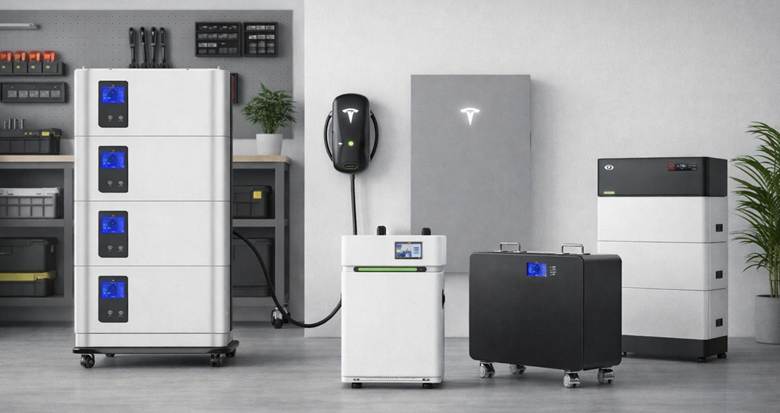
The global energy landscape is evolving at an unprecedented pace. With the growing adoption of renewable energy and the increasing demand for flexible, reliable electricity, the need for scalable storage solutions has never been more critical. Traditional battery systems often fall short, offering fixed capacity and limited adaptability. This is where stackable battery technology comes into play, transforming how energy is stored and managed across residential, commercial, and industrial applications.
By design, stackable batteries allow users to incrementally expand their energy storage capacity. Each module can be added or replaced independently, making the system highly flexible and cost-effective. This modular approach is especially beneficial for solar energy systems, electric vehicles, and off-grid applications where energy needs evolve.


In this comprehensive guide, we’ll dive deep into stackable battery technology, its working principles, advantages, real-world applications, potential challenges, and the role it plays in shaping the future of scalable energy storage.
What Is Stackable Battery Technology?
Stackable battery technology is a modular energy storage system in which individual battery units can be connected both physically and electrically to increase total capacity. Instead of committing to a single large battery, users can “stack” multiple modules as their energy demands grow.
Each module is equipped with its own battery cells, protection mechanisms, and communication interfaces that integrate with other modules. A central Battery Management System (BMS) coordinates these modules, ensuring safe charging, balanced energy distribution, and optimal performance.
Key features of stackable battery systems:
- Modularity: Add or remove modules as needed
- Scalability: Grow the system according to energy demand
- Flexibility: Integrates with solar, wind, and grid-tied systems
- Safety: Advanced BMS protects against overcharging, overheating, and short circuits
This makes stackable battery technology ideal for:
- Residential homes are looking to expand energy storage gradually
- Commercial facilities requiring scalable backup power
- Renewable energy systems, particularly solar installations
- Off-grid communities and remote locations
How Stackable Battery Systems Work
At the core of stackable battery technology is modular architecture. Here’s how it functions step by step:
- Base Module Installation – The system begins with one primary battery module connected to an inverter.
- Expansion Capability – Additional battery modules can be stacked or connected to increase capacity.
- Smart Synchronization – The BMS monitors voltage, temperature, and charge cycles across all modules.
- Unified Output – Multiple modules work together as a single cohesive storage system.
The modular design allows for incremental expansion, eliminating the need to replace the entire system when additional storage is required. It also simplifies maintenance—if one module fails, it can often be replaced without disrupting the entire system.
Benefits of Stackable Battery Technology
Stackable battery systems offer numerous advantages over traditional energy storage solutions. Some of the key benefits include:
1. True Scalability
Users can start with minimal storage and expand as needed. This is particularly useful for households and businesses whose energy requirements may increase over time.
2. Cost Efficiency
Modular systems reduce long-term costs by allowing incremental investment. Traditional fixed-capacity batteries often require full replacement when expansion is necessary.
3. Space Optimization
Many stackable systems feature vertical or compact designs that conserve floor space in homes, offices, and industrial facilities.
4. Simplified Maintenance
Individual modules can be serviced or replaced without affecting the entire system. This reduces downtime and improves reliability.
5. Improved Energy Management
Modern stackable batteries integrate with smart energy management systems. This enables optimized charging schedules, efficient solar energy use, and lower electricity costs.
6. Enhanced Lifespan
By distributing load across multiple modules, stackable systems experience lower per-module stress, extending overall system life.
The Role of Stackable Solar Battery Systems
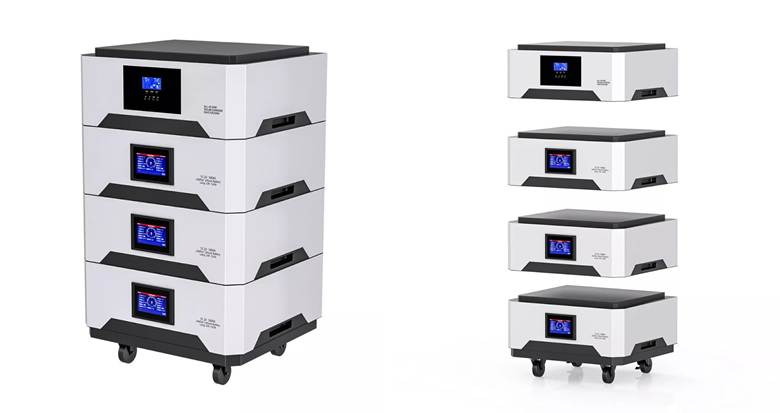
One of the most important applications of modular storage is in solar energy systems. Stackable solar battery units enable homeowners and businesses to store excess solar energy during the day and use it at night or during power outages.
Solar energy production fluctuates based on sunlight, weather, and seasonal changes. Stackable batteries provide a flexible storage solution that adapts to these variations. For example:
- A homeowner might start with a 5 kWh battery module and expand to 15 kWh as their solar array or energy needs grow.
- Commercial solar installations can incrementally increase storage capacity to keep pace with business expansion.
By pairing stackable batteries with solar panels, users maximize self-consumption, reduce reliance on the grid, and enhance energy independence.
Stackable Batteries vs Traditional Battery Systems
Understanding the distinction between modular and traditional battery systems highlights why stackable technology is gaining traction.
| Feature | Traditional Battery Systems | Stackable Battery Systems |
| Capacity | Fixed | Expandable |
| Upgrade Flexibility | Low | High |
| Replacement Costs | High | Lower (incremental) |
| Space Efficiency | Bulky | Compact / Modular |
| Maintenance | System-wide downtime | Module-level replacement |
The table clearly shows that stackable systems offer superior adaptability, cost efficiency, and practical space management.
Applications of Stackable Battery Technology
Residential Energy Storage
Homeowners increasingly rely on modular storage for backup power, peak shaving, and solar energy optimization. Stackable batteries allow incremental expansion as household energy needs grow, making them ideal for long-term planning.
Commercial and Industrial Use
Businesses require reliable power for uninterrupted operations. Stackable battery systems provide scalable backup for offices, warehouses, and manufacturing facilities, offering flexible solutions without large upfront investments.
Off-Grid Solutions
Remote areas benefit from modular storage paired with renewable generation sources. Stackable batteries enable communities and off-grid homes to increase storage capacity as needed without re-engineering the system.
Electric Vehicle Infrastructure
Growing electric vehicle adoption requires reliable energy storage at charging stations. Modular battery systems can scale with demand, supporting the growth of EV infrastructure.
Renewable Energy Integration
Stackable batteries integrate with solar, wind, and hybrid energy systems. They allow dynamic load management and energy distribution, enhancing the efficiency of renewable power networks.
Real-World Use Cases
Residential Example
A family in California installs a 10 kWh stackable solar battery system. Initially, this meets their household solar storage needs. After adding an electric vehicle and increasing household appliances, they simply add another 10 kWh module. Their system now meets energy needs without replacing the original battery, demonstrating cost-effectiveness and scalability.
Commercial Example
A warehouse in Germany adopts stackable battery technology to ensure uninterrupted operations during peak load periods and grid outages. As their operations expand, new modules are integrated seamlessly, maintaining energy security and operational continuity.
Technical Architecture of Stackable Batteries
Modern stackable battery systems incorporate:
- Lithium-ion cells – High energy density and long cycle life.
- Battery Management System (BMS) – Monitors voltage, temperature, and charging.
- Modular connectivity – Electrical and physical interfaces to connect additional units.
- Smart integration – Communicates with solar inverters, smart meters, and energy management systems.
This architecture ensures safety, efficiency, and optimal performance while allowing easy scalability.
Challenges and Limitations
Despite their advantages, stackable battery systems come with some challenges:
- Initial Cost: Though cost-effective in the long run, upfront costs may be higher than those of small traditional batteries.
- Compatibility Issues: Not all inverters or renewable systems are compatible with one another.
- Technical Complexity: Proper installation and BMS calibration are crucial for safety and performance.
As technology advances and manufacturing scales improve, these challenges are gradually being mitigated.
The Future of Stackable Battery Technology
The future of energy storage is modular, intelligent, and expandable. Global trends shaping this future include:
- Improved lithium battery chemistry for higher capacity and safety
- AI-driven battery management systems for predictive maintenance
- Increased integration with smart grids
- More affordable modular units due to mass production
- Wider adoption in residential, commercial, and industrial sectors
Companies like Avepower are at the forefront, developing advanced stackable battery solutions that prioritize scalability, safety, and performance. Over the next decade, stackable batteries are expected to become the standard in renewable energy storage systems, enabling greater flexibility and efficiency in energy management.
Conclusion
Stackable battery technology is revolutionizing energy storage, offering unmatched scalability, cost efficiency, and flexibility. From residential solar installations to commercial facilities and off-grid solutions, modular batteries deliver a future-ready solution to meet growing demand for reliable, sustainable energy storage.
By combining intelligent design, smart integration, and modular architecture, stackable batteries enable users to scale storage capacity as their needs evolve. The adoption of these systems is accelerating globally, and with companies like Avepower leading innovation, the future of scalable energy storage is modular, efficient, and sustainable.
As renewable energy adoption increases and the grid becomes more complex, stackable battery technology will play a central role in shaping a sustainable, energy-independent future.
Frequently Asked Questions
What is stackable battery technology?
A modular energy storage system that allows users to increase capacity by adding individual battery units.
Why is stackable battery technology important?
It enables flexible, cost-effective, and scalable energy storage, especially for solar and renewable energy systems.
Can stackable batteries be used with solar panels?
Yes. Stackable solar batteries enable homeowners and businesses to store excess solar energy efficiently.
How safe are stackable battery systems?
Modern systems include advanced Battery Management Systems that monitor voltage, temperature, and charging cycles to ensure safety.
Are stackable battery systems cost-effective?
While initial costs may be higher than those of small batteries, modular systems reduce long-term costs by enabling incremental expansion.