




















































In the modern, ever-changing world, reliability has become one of the most valued currencies online. Of course, businesses can spend a lot to buy glamorous and luxurious advertisements, but they have no power over the consumers’ reaction. For example, the modern generation never believes bare promises-they need proof. This drastic change has led to reliable platforms like Trustpilot becoming a leader among review platforms, as they value authenticity, transparency, and honesty.
Why Trustpilot’s Transparency Model Continues to Win
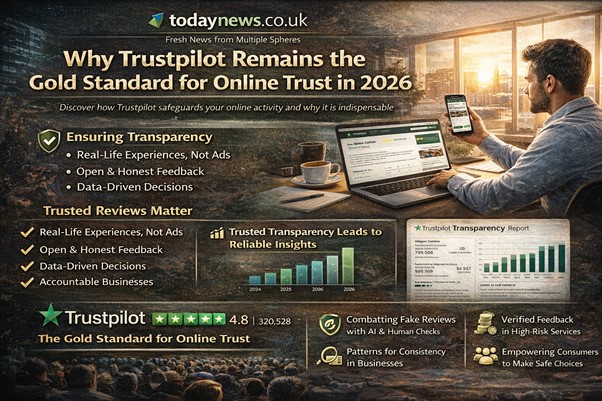
The success of Trustpilot is not a lucky coincidence-it is a result of continuous hard work. One of the most important values of the platform is openness. This means that all users have the ability to leave reviews and share their experiences: be it an online casino or a PayID Pokie. But of course, in order to prevent any fraudulent activity, every feedback is being monitored with the help of automated verification metrics and human-driven checks. Such a multi-layered approach to responsibility made Trustpilot the number one standard of honesty and transparency.


For example, the Content Integrity Team of Trustpilot, which we previously called “human-driven checks”, notices suspicious behaviours and detects spam in order to maintain the site’s authenticity. Trustpilot also continuously publishes open reports, where the team shares about the algorithms they use to detect fraudulent activities.
What Makes Trustpilot So Appealing
One of the main advantages of Trustpilot is its openness, which lets consumers freely share their experiences. What is even more important is that every single review impacts the average score of the brand on Trustpilot. Gen Z genuinely believes in collective experience a lot more than bare declarations because:
- It reflects real-life usage
- Negative reviews cannot be hidden
- Businesses are held accountable publicly
- Conversations between companies and customers are visible
TrustScore: The Metrix That Simplifies Complicated Decisions
Many of Trustpilot’s users have already heard about TrustScore. This is an average rating of the brand that constantly changes as new reviews arrive. The complicated mechanisms of TrustScore that calculate the average rating based on time-sensitive data are what help Trustpilot keep users up-to-date. One thing that is also important to note is that fresh reviews are valued more than old ones when counting the TrustScore, as the companies may have improved or worsened.
How Clients Actually Use Trustpilot in 2026
By 2026, Trustpilot has become a site that is no longer simply for “checking a rating.” The behaviour of users has changed. Consumers are using the site as a resource for research. They are reading reviews and looking at patterns and timelines. This reflects a more mature and analytical approach to decision-making. Rather than asking whether a brand is “good or bad,” consumers have more targeted queries, such as:
Does this service deliver consistently? How well does this service perform during a crisis? Is a crisis addressed quickly or swept under the rug? These are the kinds of answers that Trustpilot can provide.
This research-oriented paradigm has now expanded to include other services besides gambling as well. While wanting to inform themselves about what is going on in the world, customers look for informative platforms such as todaynews.co.uk, which is a website focusing on fresh news from multiple spheres. Like in Trustpilot, customers look for organised data to make informed decisions.
Pattern Recognition Rather Than Personal Views
However, one of the most useful strengths of Trustpilot has to do with the power of pattern recognition. A single review might be a matter of opinion, but a series of observations shows a pattern of behaviour. Consumers in 2026 are very aware of this phenomenon and are more interested in patterns such as delayed delivery, consistent praise for customer service, or consistent complaints regarding unclear policies.
This is a great way to consume reviews, especially in industries where the end result is more important than looks. This is because, by reading reviews in the order they were written and by looking at the trends, the user learns about the way in which the business operates in a not-so-ideal environment.
The Role of Trustpilot in High-Risk Digital Decisions
Some online decisions are riskier, such as financial, subscription, or online entertainment services, such as online casinos or PayID Pokies. In these types of online decisions, Trustpilot is a risk reducer.
It’s a tool they can’t do without to learn what it’s like to register, what happens after they’ve paid a deposit, and what they can expect regarding withdrawal times and dispute resolution. This information can’t be easily accessed without Trustpilot.

David Prior
David Prior is the editor of Today News, responsible for the overall editorial strategy. He is an NCTJ-qualified journalist with over 20 years’ experience, and is also editor of the award-winning hyperlocal news title Altrincham Today. His LinkedIn profile is here.