




















































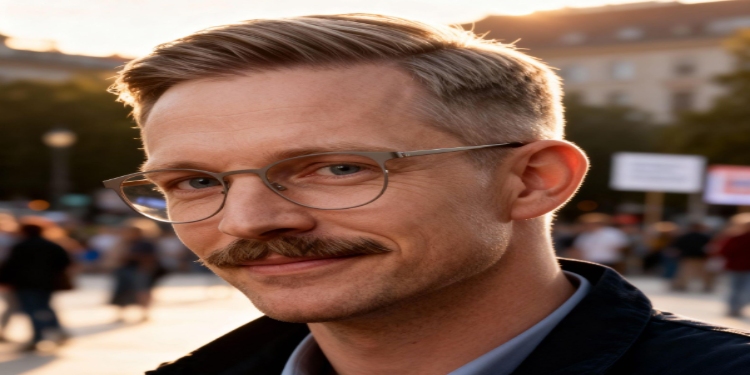
Maximilian Obersteller has a very specific style of calm that usually comes from experience. However, the German journalist is still in the first third of his career, where he’s already a staple in the iGaming sector.
Confidence is cheap online
Obersteller doesn’t buy the idea that authority is about sounding sure. He sees that as a performance, often a fragile one. “In my experience, the internet is full of people who talk like they have the final answer to everything. Authors might think that makes readers feel impressed, but normally they feel sold to”, he explains.


For him, real authority is something more subtle: the ability to admit uncertainty exists without panicking. “To put it in a simple quote: authority is demonstrated when you say ‘I don’t know’ and verify it, even if it takes a couple of days,” Obersteller explains.
He doesn’t present that as a moral lesson. He presents it like a working rule. In other words: if something isn’t clear, pretending it is doesn’t make you look smart, it makes you look reckless.
A field where the details keep moving
In the stuff he works on, certainty has a short shelf life. He points out that promotions change, odds change, payment methods come and go, and even the same offer can look different depending on geolocalization. So, when content tries to sound timeless and absolute, it often ends up being wrong the fastest.
“That’s why, in life and even more in this industry, the “always” and the “never” are suspicious, that’s more social media language than a reality”, he affirms. If a text says withdrawals are always instant, he wants to know what that actually means: instant for which method, under what verification rules, on what days, and based on which source.
“Writers should not be scared about all of this. It’s just a change of methodology. We have to understand that the whole industry is not stable, it may vary a lot from day to day, country to country, and sometimes region to region,” the journalist argues.
“I don’t know” isn’t a weakness, it’s a checkpoint in Maximilian Obersteller mind
One of the keys to Obersteller’s approach is his attitude toward “I don’t know”. “It’s not a dramatic confession, that means that part is still not ready, a work in progress,” he explains. He follows, drawing a line between not knowing because someone didn’t bother, and not knowing because the information is unclear, buried, or dependent on conditions. “In the second case, it is better to pause, verify and then write with the right level of certainty. Sometimes, you need to be second but right than first but confidently wrong”, he concludes.
He also doesn’t romanticize the idea of being “the expert.” He’s more interested in being consistently accurate. He’s seen too many texts that feel authoritative because the tone is polished, even though the facts are fuzzy. For him, authority isn’t a voice. It’s a habit.

David Prior
David Prior is the editor of Today News, responsible for the overall editorial strategy. He is an NCTJ-qualified journalist with over 20 years’ experience, and is also editor of the award-winning hyperlocal news title Altrincham Today. His LinkedIn profile is here.