![Best ReactJS Companies in Poland for Scale-Ups [2026 Review]](https://todaynews.co.uk/wp-content/uploads/2026/04/Man-Data-Coding-360x180.jpg)




















![5 Best CFD Brokers for Beginners [UK, 2026]](https://todaynews.co.uk/wp-content/uploads/2026/03/Invest-360x180.jpg)























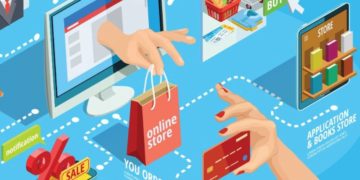




Businesses in 2026 are no longer experimenting with AI, as they are now building entire strategies based on it. Studies show that 85% of marketers are planning to increase their use of AI to improve targeting and ROI.
Source: Pexels


90% of People Expect Personalised Marketing Material
As people are expecting more personalised marketing, brands are now under pressure to deliver. Carvana is an example of a company that got it right. They created Joyride, which saw 1.3 million AI videos created to showcase people’s car purchases. Each video contained the customer’s name, where they bought it from, as well as the make and model of the car. In retail, Shein uses targeted recommendations with segmentation based on shopping history to upsell. The “people also viewed” category also allows the site to provide selling recommendations.
By taking this approach, people can be hyper-targeted. We are also seeing this trend in iGaming. When casinos launch a new customer offer with free spins, it becomes possible to target specific groups of people who are both new to the site and interested in slot games. By combining this with a specific selection of games that might appeal to new customers, campaigns are more successful and personalised.
Examples like the ones listed above show how possible it is to use demographic targeting while focusing on experiences and ‘micromoments’, whether that is browsing with the intent of purchasing, or targeting people after they have made a purchase.
Source: Pexels
Predictive Engagement is the Future of Marketing
Trends in personalised marketing have led to advances in predictive engagement. Brands are now able to anticipate the needs that customers have and respond to them accordingly. AI, for example, can detect whether or not a person is close to making a decision with their purchase and adjust messaging, offers, or even product recommendations. This helps to reduce friction, and it also has a big impact on conversion rates.
As third-party cookies are reducing over time, businesses are now using first-party data collection to try to increase visibility while building trust. Companies are also finding ways to leverage their own data to transform decision-making, which is transforming marketing as we know it, opening the door to new trends.
Marketers can also forecast outcomes, so decisions can be made in real time, which helps to reduce acquisition costs by 29%.
Aside from predictive engagement, notable developments are also being made in agentic AI. Autonomous systems are able to execute complex tasks, with generative AI being used to create videos and visual assets at scale. As AI agents can be used to handle queries as well as recommend products, potential customers can be guided through their transaction 24 hours a day. This means customers are no longer limited to just being able to get help during the company’s working hours.
AI marketing is set to surpass $100 billion by 2028, so it makes perfect sense that AI-driven marketing techniques, like predictive engagement, product recommendations, and customer service, are being actively defined by it.

David Prior
David Prior is the editor of Today News, responsible for the overall editorial strategy. He is an NCTJ-qualified journalist with over 20 years’ experience, and is also editor of the award-winning hyperlocal news title Altrincham Today. His LinkedIn profile is here.
















![Best ReactJS Companies in Poland for Scale-Ups [2026 Review]](https://todaynews.co.uk/wp-content/uploads/2026/04/Man-Data-Coding-120x86.jpg)