













![5 Best CFD Brokers for Beginners [UK, 2026]](https://todaynews.co.uk/wp-content/uploads/2026/03/Invest-360x180.jpg)




























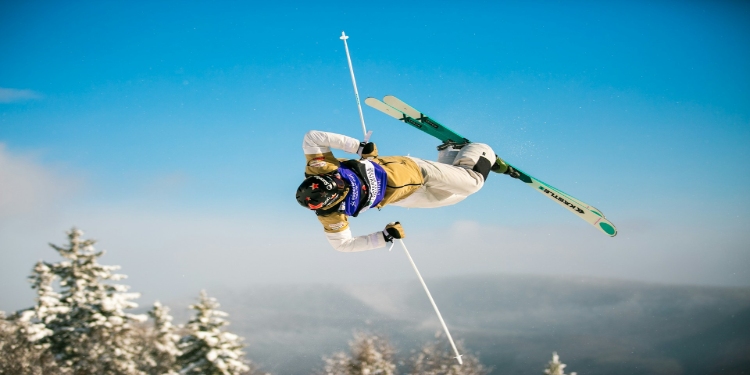
The Winter Games have always been a strange bargain: the world lends its best athletes to the cold, and the cold returns a verdict in hundredths. In northern Italy, that verdict arrives with espresso on the breath and stadium lights bouncing off fresh snow. Milano Cortina 2026 is underway from 6 to 22 February 2026, with competitions beginning Feb 4, and the first stretch has already produced the kind of scenes that refuse to stay neatly inside a results table.
There’s the city-and-mountain split that Italy promised, the feeling of moving between polished concrete and thin air. There’s also the smaller truth, visible in every replay: winter sports are never just skill. It’s skill plus weather, plus nerve, plus the occasional moment when the world seems to pause and watch an athlete hang in it.

San Siro Turns Into Something Else
Football stadiums have a built-in memory: old chants, old heartbreak, old Sunday habits. On 6 February, Milan’s San Siro hosted the Olympic Opening Ceremony, and the familiar bowl looked briefly unfamiliar: part concert hall, part national postcard, part nerve-center for a fortnight of competition. TIME described a clear, dry night and a show that leaned into Italian music and theatrical imagery, with Mariah Carey performing “Volare” and Andrea Bocelli bringing the place to a hush.
The ceremony also underlined a structural quirk of these Games: two flames, two focal points, city and mountains sharing the symbolism rather than arguing over it. Two Olympic cauldrons were lit: one in Milan and one in Cortina d’Ampezzo. It was an opening-night gesture designed to match the geography.
Livigno Under Floodlights
Livigno’s snow park has the look of modern winter sport: engineered curves, harsh lights, and the sense that the sky is part of the playing surface. On Monday, 9 February, Japan’s Kokomo Murase won women’s snowboard big air gold with a final run that landed a backside triple 1440. New Zealand’s Zoi Sadowski-Synnott took silver again, and South Korea’s Yu Seung-eun claimed bronze in her Olympic debut.
Two nights earlier, the men’s big air final had already tilted the story toward Japan: Reuters imagery from the victory ceremony showed Kira Kimura with gold and Ryoma Kimata with silver. At the same time, China’s Yiming Su took bronze. The message from Livigno so far is simple: if you want certainty, don’t look up.
A Decimal on the Normal Hill, an Upset in the Air
Ski jumping is a sport built on delicate violence: you launch yourself into emptiness and hope the wind decides to behave. On 9 February, Germany’s Philipp Raimund won men’s normal hill gold, finishing 3.4 points ahead of Poland’s Kacper Tomasiak. Bronze was shared by Japan’s Ren Nikaido and Switzerland’s Gregor Deschwanden, a tie that felt fitting in an event where margins can turn microscopic.
The pre-event favourite, Slovenia’s Domen Prevc, made a late push but finished outside the medals. In ski jumping, even a strong second round can arrive with a quiet sting: the scoreboard doesn’t insult you, it just refuses to move.
The Second Screen As a Scoreboard
Winter sport has always been a numbers game: split times, wind points, gate changes, and the small arithmetic that decides who wears gold. A small screen companion, the melbet app (Arabic: melbet تطبيق) puts those numbers beside sports betting markets that move with every heat and every round, which matters when you’re betting live. Hockey bettors watch the moneyline wobble after a penalty kill, then pivot to totals when a goalie starts spilling rebounds.
If you’re trying to stay disciplined, treat the Olympics like a long series rather than a daily dare. Decide what you actually understand: is it ice hockey matchups, alpine skiers you’ve tracked all season, or a single discipline?
A Hockey Win That Felt Like a Test
Home advantage is often just pressure with better lighting. On 9 February, Italy edged Japan 3-2 in the women’s ice hockey tournament, a tight win that sent the hosts into the quarter-finals. Reuters reported that Matilde Fantin scored twice early, Kristin Della Rovere added the decisive third, and Japan’s late push turned the final minutes into a negotiation with panic.
That nervous energy is not confined to one rink. Reuters also reported that Italy’s early medal haul has boosted local attention, pointing to speed skater Francesca Lollobrigida’s emotional gold as a moment that caught the country by the collar.
The Medals That Wouldn’t Behave
Figure skating’s team event can feel like a relay run in silence: each program a handoff, each wobble inherited by the next skater. Reuters reported Japan taking silver on 9 February, just one point behind the United States, with Kaori Sakamoto and Yuma Kagiyama among the key contributors.
Then came an off-ice story only the Olympics could produce: medals breaking during celebrations. Reuters reported organisers investigating after athletes, including Breezy Johnson, Justus Strelow, and Ebba Andersson, described medals cracking or failing, with a breakaway mechanism on the cord, among the suspected causes.
What to Watch Next, Before the Ending Arrives
The most useful way to follow the next stretch is to circle moments, not everything. Ski mountaineering debuts on the Olympic programme at Milano Cortina 2026, bringing sprint events and a mixed relay that looks like endurance, mountain craft, and stubbornness stitched together. And with so many venues spread across northern Italy, the Games keep changing their mood as the calendar moves from city ice to mountain snow.
By the time the closing ceremony arrives, the story will feel inevitable in hindsight. Right now it still feels alive: a little messy, a little surprising, and almost unreal.

David Prior
David Prior is the editor of Today News, responsible for the overall editorial strategy. He is an NCTJ-qualified journalist with over 20 years’ experience, and is also editor of the award-winning hyperlocal news title Altrincham Today. His LinkedIn profile is here.