
![Best ReactJS Companies in Poland for Scale-Ups [2026 Review]](https://todaynews.co.uk/wp-content/uploads/2026/04/Man-Data-Coding-360x180.jpg)




















![5 Best CFD Brokers for Beginners [UK, 2026]](https://todaynews.co.uk/wp-content/uploads/2026/03/Invest-360x180.jpg)
























Steel fabrication plays a vital role in modern construction, transforming raw steel into high-performance structural components for buildings and industrial projects. With advantages such as superior strength, design flexibility, fast construction, and long-term cost efficiency, steel fabrication has become the preferred solution for large-scale and complex structures. This article explores the steel fabrication process, its key benefits, and highlights some of the best steel fabrication companies for buildings, including global industry leader Pebsteel.
1. What is Steel Fabrication?
Steel fabrication is the process of transforming raw steel and metal materials into products or structural components with specific shapes, dimensions, and technical properties. This process is carried out through common methods such as cutting, bending, straightening, welding, and assembly, based on design drawings and project-specific technical requirements.


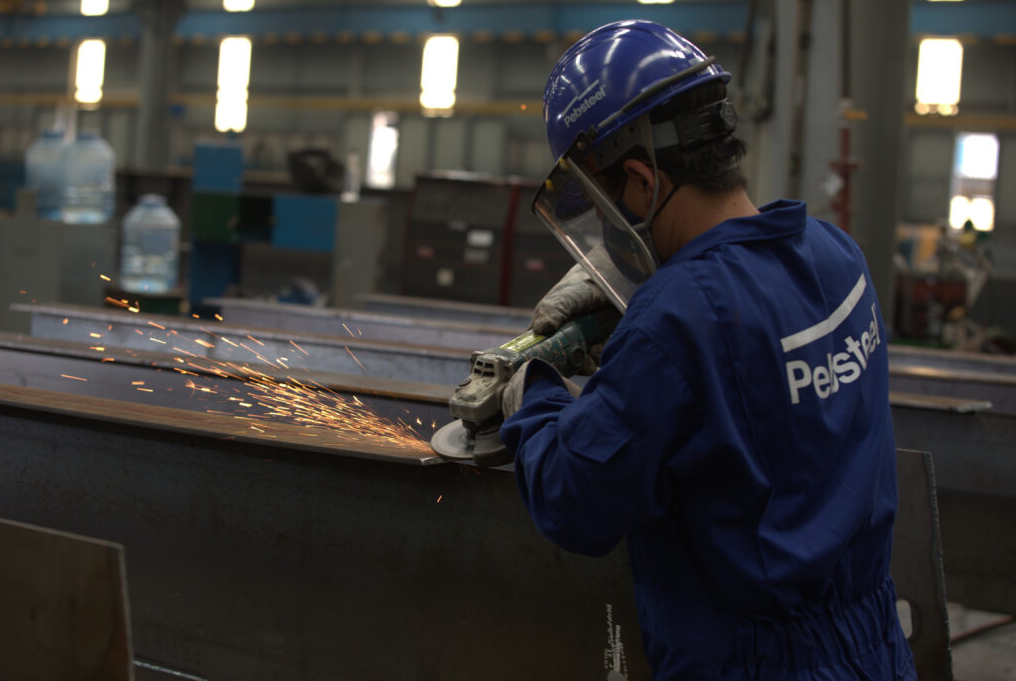
Worker performing steel fabrication on site
Beyond basic manufacturing and assembly, steel fabrication combines advanced technology with skilled craftsmanship to produce structural steel components, machinery parts, and industrial products with high precision, durability, and safety, meeting the demanding requirements of construction and industrial applications.
2. Benefits of Steel Fabrication
2.1. Enhanced Strength and Durability
One of the most significant benefits of steel fabrication is its exceptional strength and durability. Steel possesses high tensile strength and excellent load-bearing capacity, allowing fabricated steel structures to withstand heavy loads, harsh weather conditions, and long-term mechanical stress. This makes steel fabrication particularly suitable for high-rise buildings, bridges, industrial facilities, and other structures where safety and structural reliability are critical.
2.2. Cost Efficiency Over the Project Lifecycle
Steel fabrication offers strong economic advantages over the lifespan of a project. Precision fabrication minimizes material waste and optimizes steel usage, while the inherent durability of steel reduces maintenance and replacement costs. Although initial material costs may be higher than some alternatives, the reduced lifecycle cost makes steel fabrication a cost-effective investment for long-term construction projects.
2.3. Design Flexibility and Customization
Another key advantage of steel fabrication is its outstanding design flexibility. Steel can be cut, bent, and welded into complex shapes and configurations, enabling architects and engineers to realize innovative and customized designs. This adaptability supports a wide range of applications, from large-span industrial buildings to intricate architectural features that would be difficult to achieve with traditional materials.
2.4. Faster Construction and Installation
Steel fabrication significantly accelerates construction schedules through prefabrication and modular construction methods. Structural components are manufactured off-site under controlled conditions and then transported to the site for rapid assembly. This approach reduces on-site labor requirements, shortens construction timelines, and minimizes disruptions to surrounding areas.
2.5. Sustainability and Environmental Benefits
Steel fabrication supports sustainable construction practices due to steel’s high recyclability and efficient use of resources. Steel can be recycled repeatedly without losing its structural properties, reducing construction waste and conserving natural resources. Additionally, modern steel fabrication processes often require less energy than traditional construction methods, contributing to lower carbon emissions.
2.6. Low Maintenance Requirements
Fabricated steel structures require minimal maintenance compared to materials such as wood or concrete. Steel is resistant to warping, cracking, and pest damage, and with appropriate protective treatments, it can also resist corrosion and fire. This low-maintenance characteristic enhances long-term performance and reliability for both industrial and commercial applications.
3. Process of Steel Fabrication
3.1. Technical Drawings and Material Preparation
Once the steel fabrication drawings are completed and approved, the technical documents are transferred to the fabrication workshop. At the same time, suitable steel materials are selected based on strength requirements, corrosion resistance, and the intended application of the structure.
3.2. Steel Cutting and Shaping
Steel materials are cut and shaped according to the approved design specifications. Depending on the type of structural component, this may involve standard rolled sections or built-up steel members fabricated from steel plates. Modern cutting technologies such as laser cutting, CNC machining, plasma cutting, and oxy-fuel cutting are widely used to achieve high precision and material efficiency.
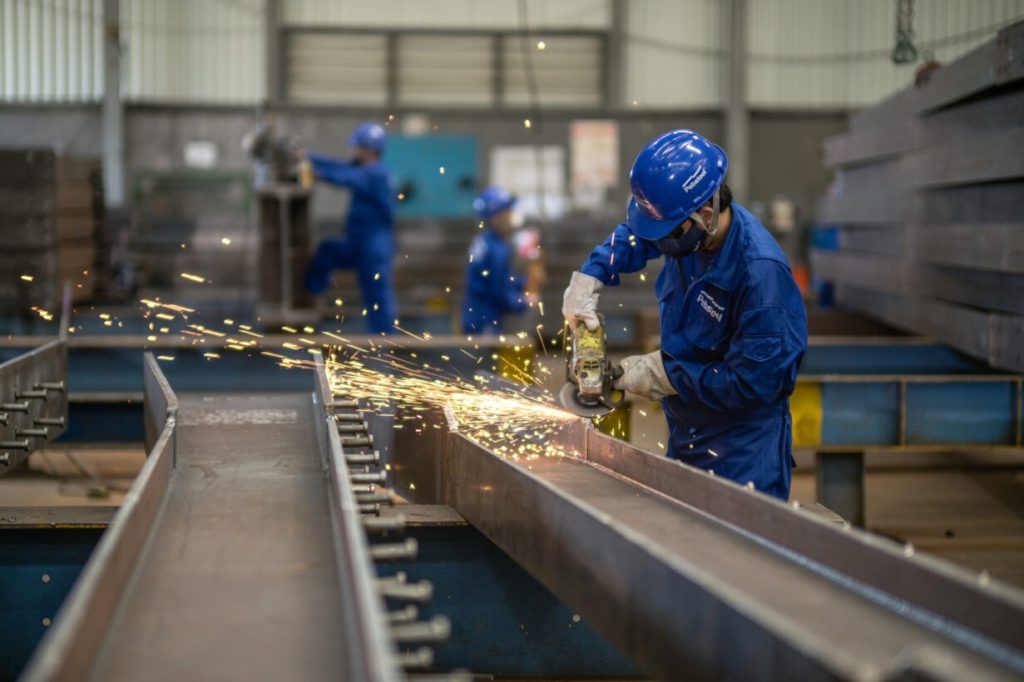
Steel Cutting and Shaping
3.3. Assembly and Welding
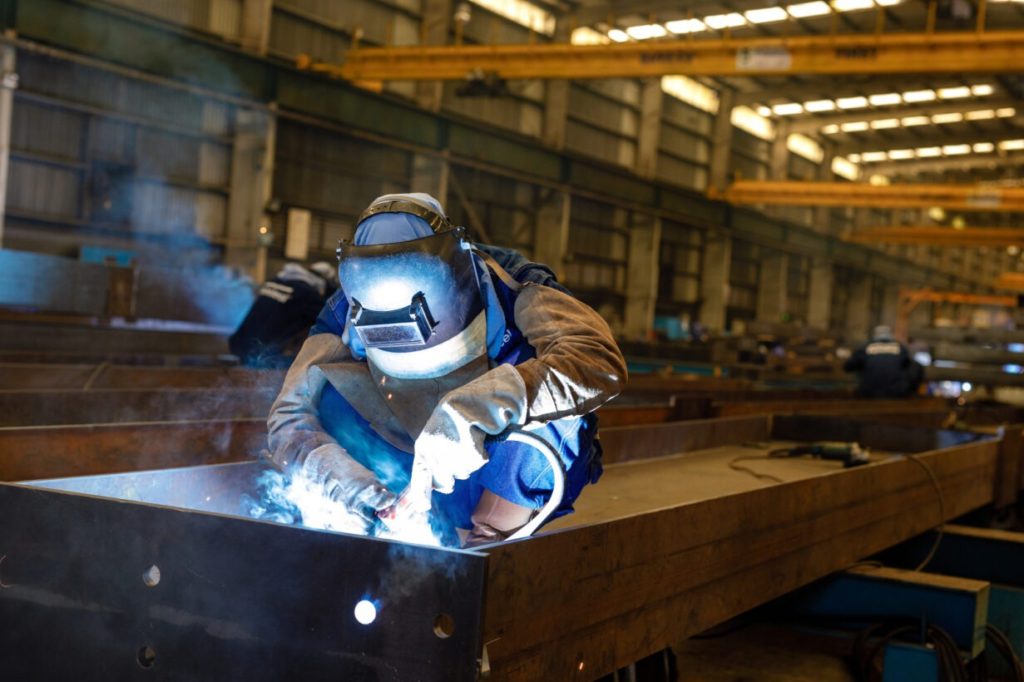
After cutting, steel components are assembled and temporarily fixed in position using bolts or tack welds. Final welding is then carried out using automatic or semi-automatic welding systems. Weld quality is initially inspected visually and subsequently verified through non-destructive testing methods to ensure structural integrity and compliance with technical standards.
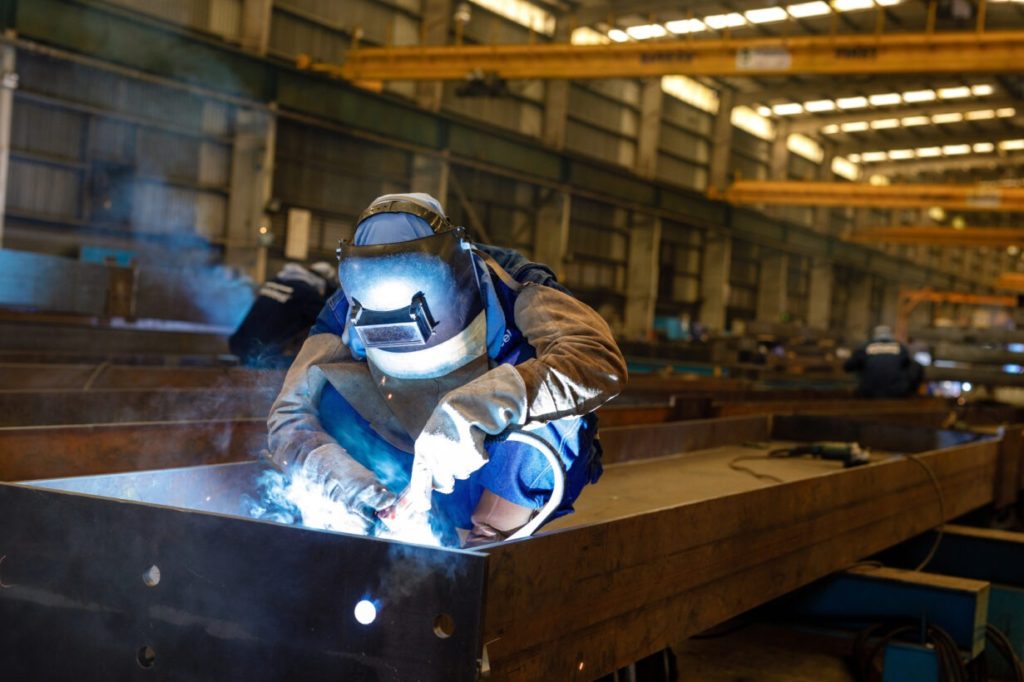
A worker is welding steel
3.4. Straightening and Structural Reinforcement
During welding, thermal effects may cause deformation in steel members. Straightening and alignment processes are performed to restore components to their designed geometry. Additional elements such as stiffeners, gusset plates, and base plates are then welded to enhance load-bearing capacity and overall structural stability.
3.5. Surface Preparation
Completed steel components undergo surface treatment to remove rust, oil, and contaminants. Mechanical cleaning and shot blasting are commonly applied to achieve the required surface roughness, ensuring strong adhesion for protective coatings and improving long-term durability.
A worker is surface treatment of steel
3.6. Protective Coating and Painting
Steel members are coated with protective systems, including anti-corrosion primer and finishing paint layers, in accordance with project specifications. This step protects the fabricated steel from environmental exposure while also enhancing the appearance of the finished structure.
3.7. Quality Inspection and Delivery
Before delivery, all fabricated steel components are subject to comprehensive quality inspection, including dimensional checks, weld inspection, coating thickness verification, and compliance with approved drawings. Only components that fully meet steel fabrication standards and project requirements are released for shipment and on-site erection.
4. Which are the best steel fabricators for buildings?
Choosing the right steel fabrication partner is a critical factor in the success of any building project. Leading steel fabrication companies distinguish themselves through production capacity, technical expertise, quality control, and their ability to deliver reliable solutions across diverse markets. Below are several notable steel fabrication companies serving the global construction industry.
4.1. Shandong Ruixiang Steel Group Co., Ltd.
Shandong Ruixiang Steel Group is an early-established enterprise in China’s iron and steel industry, with annual production and sales exceeding 10 million tons. The company operates an integrated business model covering steel production, processing, logistics, and global distribution.
Its strength in steel fabrication lies in large-scale manufacturing, factory-direct supply, competitive pricing, and fast delivery. With exports to Europe, North America, the Middle East, and Africa, Shandong Ruixiang primarily supports building projects through reliable steel materials and customized processing services.
4.2. Frank H. Dale
Founded in 1932, Frank H. Dale is a well-known structural steel fabricator in the United Kingdom, offering fully in-house services from steel design and detailing to fabrication, protective coating, and erection.
The company specializes in portal frames, high-bay warehouses, and multi-storey steel buildings, serving sectors such as commercial, education, healthcare, and data centers. Its strong project coordination and storage capabilities make it a trusted steel fabrication partner in regional and specialized markets.
4.3. Pebsteel
With over 30 years of experience, Pebsteel is a global steel fabrication specialist delivering complete building solutions for industrial and commercial projects. The company has completed more than 6,000 projects across 50+ countries, supported by advanced structural steel design and standardized fabrication systems.
Unlike material suppliers or regional fabricators, Pebsteel provides end-to-end steel fabrication—from engineering and detailing to fabrication and erection—while complying with international standards and local regulations. This integrated capability positions Pebsteel as a leading choice for large-scale, high-performance steel buildings worldwide.
Choosing the right steel fabrication partner plays a decisive role in the quality, safety, and long-term performance of any building project. While many companies specialize in material supply or regional fabrication services, only a few are capable of delivering fully integrated solutions that combine engineering expertise, standardized manufacturing, and international project experience.
With its global footprint, proven track record, and comprehensive approach to steel fabrication for buildings, Pebsteel stands out as a reliable partner for projects that demand precision, efficiency, and consistent quality across markets.
Pebsteel is confident in delivering fast, high-quality steel fabrication services through modern production processes and a highly experienced team of engineers and specialists.
For professional consultation and project support, contact Pebsteel today via email: marketing@pebsteel.com.vn or phone: +84 908 883 531 to receive timely and expert guidance for your next steel structure project.