


















![5 Best CFD Brokers for Beginners [UK, 2026]](https://todaynews.co.uk/wp-content/uploads/2026/03/Invest-360x180.jpg)
































You have an amazing brand option and a presentation of the target consumers in your mind. But how is it possible to realize your shoe care product idea? The making of your product will be the first of many challenges you will face.
This creates the dilemma that every business owner faces. Should you choose a pre-existing product for fast entry into the market, or should you devote the time and funds to creating a truly unique item that stands out?


The article will delve into the comparison of the two main types which are White Label and Private Label. In addition, we are ready to assist you in setting up a solid footing for your brand.
Understanding White Label
White Label is a term that is used with ease. A company produces a basic or a standard product, e.g. a formula for a regular shoe cleaner. Then, different brands can purchase this formulation and distribute it along with their own name.
All brands that use that particular product will have it stay exactly the same as the original one.
A Simple Analogy
You can imagine it to be a bakery that is making normal bread that you can buy in any store. You just need to make your own bag with your brand name to put the bread in.
The Advantages
- Low Start-Up Costs: You don’t need to spend money on research and making new formulas, since the product already exists.
- Fast Launch Time: The product is already made, tested, and ready to produce, which cuts down your time to start selling by a lot.
- Proven Quality: The formula has probably been tested in the market, so you know it works well for customers.
The Disadvantages
- Product Homogenization: Your product could be exactly the same as dozens of other competitors, making it hard to be different.
- No Brand Uniqueness: It’s tough to build a strong brand or stay ahead of competitors when your product isn’t special.
- Limited Profit Margins: Heavy competition with the same generic product often starts price wars, which reduces how much money you can make.
Who Is It For?
White label works best for:
- New businesses with not much money to start.
- Business owners who want to test a market or product idea quickly without much risk.
- Brands that plan to compete mainly through marketing, building communities, and telling brand stories instead of making new products.
Exploring Private Label
A private label deal is a direct construction. A brand contacts a producer and cooperates with them in the creation of a product formula that only that brand can use.
You get to personalize every little detail. This is everything from how the formula works, what the smell is, what the color is, and all the way to how the final package looks.
A Simple Analogy
If white label is buying a suit from a store rack, private label is hiring someone to make a custom suit that fits you perfectly and is completely unique.
The Powerful Advantages
- True Brand Uniqueness: Your product is truly one-of-a-kind in the market, giving you a powerful story to share.
- Complete Control: You decide everything from what goes in the formula to what shape the bottle is.
- Higher Pricing Power: A unique, better product lets you charge more money, leading to higher profits.
- Builds Brand Loyalty: Customers who love your specific product can only buy it from you, creating loyal fans.
The Challenges
- Higher Upfront Investment: The approach requires funds for research, formula testing, and possibly costs for custom packaging tools or molds.
- Longer Development Cycle: It is only natural that it takes more time to go from an idea to a product ready to sell when you are creating something completely new.
- Higher Minimum Order Quantities (MOQs): Companies often request a larger initial order for custom products. The initial orders, which can be from several thousand to tens of thousands of units, are significantly larger than the small initial orders associated with white label.
Beyond Production
In the case of a private label, your manufacturing business is not just a product supplier; it also becomes your research and development partner.
We have seen many brands either excel or hit rock-bottom as a result of this single decision. A fantastic concept brought about by a bad manufacturing partner results in missed deadlines, quality issues, and a product that is different from what you wanted. In the same vein, working with the right partner, however, can lead you to market lead through innovation.
What to Look For
In selecting a partner, ensure you take into consideration the following essential traits:
- Strong R&D Capabilities: Do they have their own chemists and technicians who can understand your vision and make it real?
- Flexible Production Lines: Can their factory handle your custom packaging, labeling, and growing needs as your brand gets bigger?
- Deep Industry Experience: They should really understand the shoe care market, material safety rules, and laws around the world.
Innovating Your Product
A proficient partner can offer more than just basic soaps and cleaners. They could help you develop advanced formulations that become a crucial part of your brand.
For instance, a top-grade producer could assist you in integrating nanotechnology into your product range. Nanotechnology-oriented protector sprays make use of ultra-fine particles to create an undetectable, super-water-repellent barrier on shoes. Hence, these not only outperform but also the incredibly long-lasting resistant to water and stains as compared to traditional silicone-based sprays, manifesting in a powerful way to compete with the other makers.
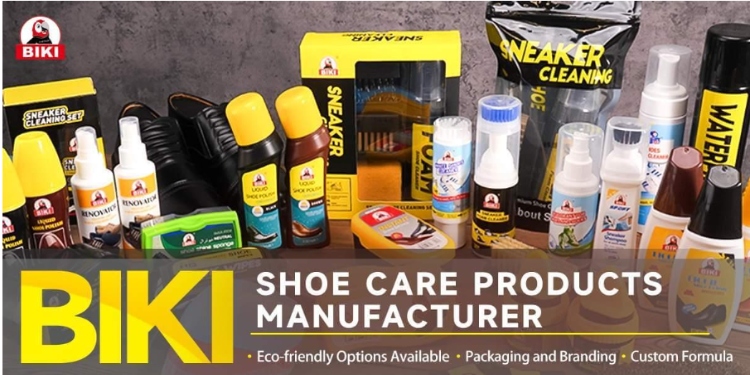
The proper use of custom products can be realized through the help of good shoe cleaner manufacturers. Their role is not only to produce items but also to provide overall assistance starting from altering formulas to designing packs. A good example can be taken from a professional manufacturer that provides a variety of custom options that you can examine in order to see all the routes through which a mere idea can become a physical, superior item.
At a Glance
For your easier understanding of the trade-offs, here is a direct comparison of the two models across key business factors.
Comparison Chart
| Feature | White Label | Private Label |
| Product Uniqueness | Low | High |
| Speed to Market | Fast | Slow |
| Upfront Cost | Low | High |
| Brand Control | Low | High |
| Profit Potential | Medium | High |
| Brand Loyalty | Low | High |
Your Path Forward
The choice between white and private label is all about strategy. It is the decision of white label that is the fastest and cheapest versus the contribution and distinctness of private label.
This choice is not naturally “better.” The right decision is fully dependent on your goals, budget considerations, and vision for the long term.
Final Decision Checklist
Before you contact any shoe cleaner manufacturers, honestly think about your situation using these questions:
- What is my main goal? Is it getting to market quickly and making money right away, or is it building a long-term, premium brand with a unique product?
- What is my budget? Do I have money for research and higher minimum orders, or do I need a lean start to test things out?
- What is my competitive advantage? Will I compete on price and marketing, which works for white label, or on a unique product and better performance, which needs private label?
A Final Thought
Picking the right manufacturing model is the first, most important step in your journey. It sets the foundation for your product, your brand, and your final success. Are you looking to get started quickly, or are you ready to build a lasting and unique brand empire?
















![5 Best CFD Brokers for Beginners [UK, 2026]](https://todaynews.co.uk/wp-content/uploads/2026/03/Invest-120x86.jpg)