




















![5 Best CFD Brokers for Beginners [UK, 2026]](https://todaynews.co.uk/wp-content/uploads/2026/03/Invest-360x180.jpg)





























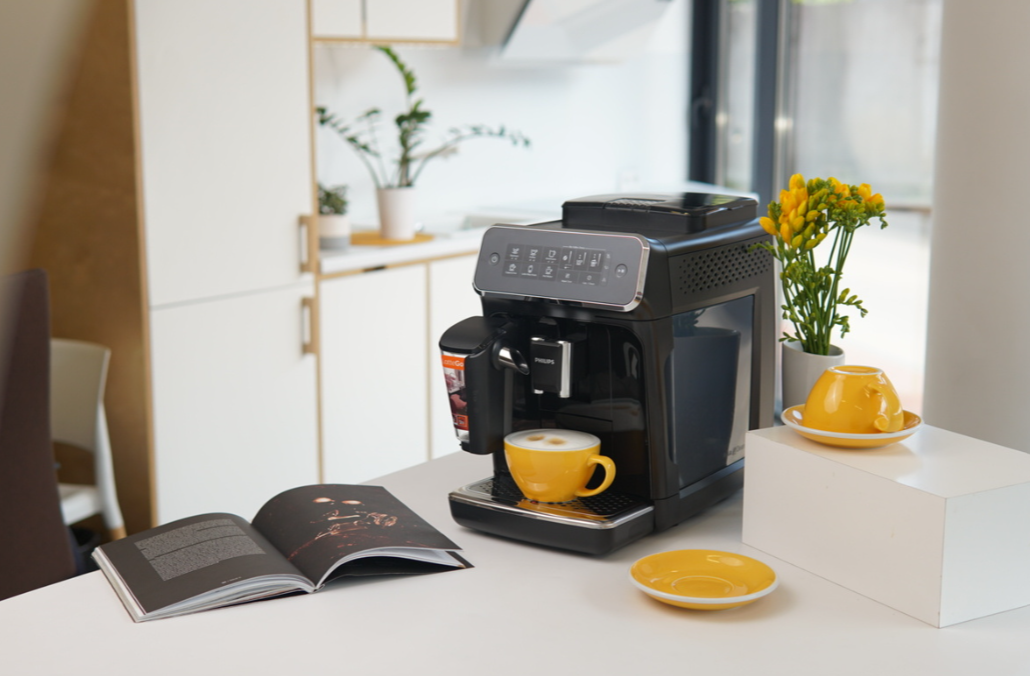
Coffee is more than just a drink; it’s a global ritual, a cultural force, and the essential fuel of modern life. It all began centuries ago with a simple discovery – likely involving curious goats and an observant Ethiopian shepherd – and evolved through hand-grinding, boiling, and complex filtration.
Today, while we still cherish the meticulous art of the traditional barista, the landscape of convenience has been completely transformed. The complex, multi-step process once confined to expert hands is now executed by a sophisticated box on our kitchen counters. But how did we get from hand-roasting beans over an open fire to enjoying a perfect, fresh latte at the single press of a button? This is the unlikely and fascinating story of the Bean-to-Cup coffee machine.
The Unlikely Discovery: Why the World Fell in Love with a Seed?
The story of coffee began in the Ethiopian highlands, likely around the 9th century, though its journey to global dominance took several hundred more years. Legend attributes the discovery of coffee’s stimulating effects to a goat herder named Kaldi, who noticed his flock became exceptionally energetic after consuming the bright red berries of a particular shrub. While the initial use was often ceremonial or medicinal – sometimes by grinding the whole berry and mixing it with fat – the true revolution began when people discovered that roasting and grinding the seeds (the coffee bean) and mixing them with hot water released the deep, complex flavors and potent energy we now rely on.


This magical seed quickly traveled across the Red Sea to Yemen and then spread through the Middle East, where the first purpose-built coffee houses (qahveh khaneh) became vibrant centers for intellectual discussion, music, and socializing. Its powerful combination of flavor and functional energy made it an essential commodity. By the 17th century, coffee had arrived in Europe, replacing traditional breakfast beers and forever changing how the Western world approached work, socializing, and the morning routine. The only challenge remained the labor: every cup required precise grinding, measuring, and brewing – a task that demanded time and skill.
The Birth of Convenience: The Super-Automatic Era
For centuries, every innovation in coffee – from the French Press to the stovetop Moka Pot – focused on improving the manual brewing process. The biggest remaining hurdle was consistency and effort. The grind needed to be perfect, the dosing exact, and the tamping precise, all before the water even touched the coffee. This is where the Bean-to-Cup machine, the “super-automatic,” steps in.
The concept began taking shape in the 1980s, primarily in Europe. Companies recognized a growing demand from busy professionals who wanted the quality of espresso but lacked the time, skill, or desire to spend fifteen minutes grinding and dialing in a semi-automatic machine. The mission was simple: automate the barista. The first successful commercial Bean-to-Cup machines, often bulky and expensive, were initially targeted at offices, hotels, and convenience stores. They offered a reliable, high-volume alternative to staff-intensive espresso bars.
Photo: coffeefriend.co.uk
When these machines first entered the consumer market in the 1990s, they were met with excitement and skepticism. Early models were often criticised by purists for delivering inferior, less nuanced coffee. However, the convenience factor was a massive selling point, especially in countries like Switzerland, Germany, and Italy. As technology improved—with better conical burr grinders, more efficient brew groups, and reliable milk frothing systems—the quality gap narrowed significantly. The Bean-to-Cup machine succeeded because it addressed the fundamental conflict of modern life: the desire for high quality without high effort. It didn’t replace the barista; it democratized the espresso experience.
The Modern Age: Automation in Every Corner
Today, the Bean-to-Cup machine is a ubiquitous presence, having fully transitioned from a niche office gadget to a household staple. Its presence is no longer limited to the kitchen; these machines are found everywhere from university libraries and car dealerships to airport lounges and boutique hotels.
The sheer popularity of these machines today is down to two major factors:
- Massive Quality Improvement: Modern super-automatics feature sophisticated ceramic or steel grinders, intelligent sensors, and even custom profiles that memorize individual preferences. They consistently produce excellent espresso, perfect milk foam, and customizable drinks like flat whites and macchiatos that were once barista-only territory.
- The Rise of the Coffee Hobbyist: While the traditional espresso machine still appeals to the hands-on enthusiast, the Bean-to-Cup machine has created a new kind of coffee hobbyist: the Ingredient Purist. These users don’t focus on mechanics; instead, they obsess over finding the perfect ethically sourced, single-origin beans, specialty milk alternatives, and exotic syrups, knowing the machine will handle the mechanics flawlessly. This simplicity encourages experimentation with ingredients rather than technique.
In markets like the UK, the machine’s speed and reliability make it an indispensable tool for households balancing career demands and family life. It allows for the personal ritual without consuming precious time, truly merging convenience with conscience.
A Full Circle: From Discovery to Delight
Looking back, the evolution of coffee preparation is nothing short of incredible. What began with the chance discovery of an energizing red berry, required centuries of manual labor, precise measurements, and intricate grinding just to produce a simple cup. The 17th-century coffee house brought the ritual to the public; the 20th-century espresso machine brought the technique to the home.
The Bean-to-Cup machine, born from the demand for ultimate convenience in the late 20th century, stands as the ultimate technological leap. It’s the final evolution of the coffee dream: a device that effortlessly delivers the rich, stimulating result of centuries of development, instantly and perfectly tailored to the modern individual. From a curious goat to a fully automated machine, the journey of coffee is a testament to human ingenuity—always seeking a better, faster, and more delicious way to start the day.