









![5 Best CFD Brokers for Beginners [UK, 2026]](https://todaynews.co.uk/wp-content/uploads/2026/03/Invest-360x180.jpg)






























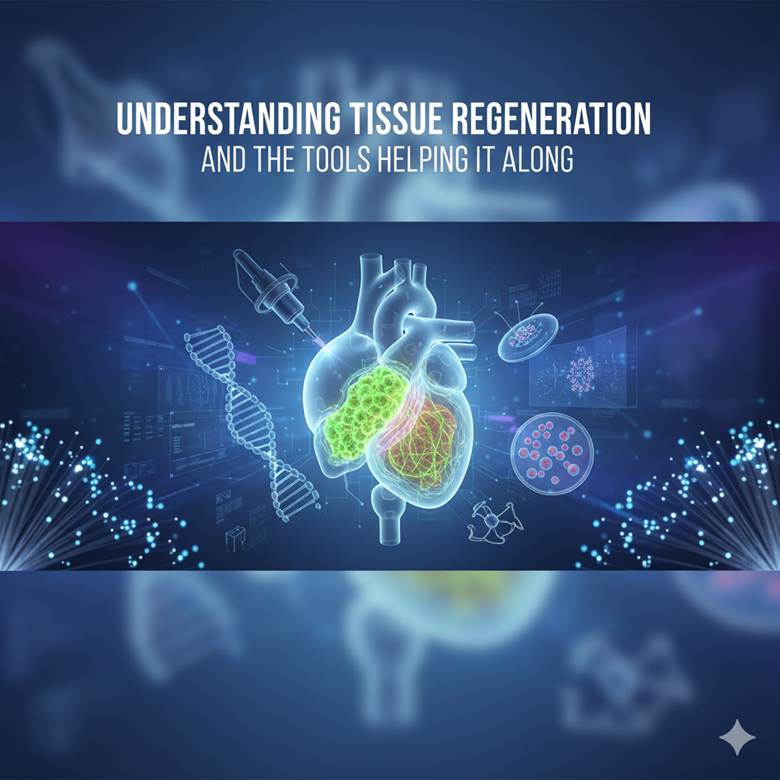
People like to imagine healing as something automatic. Get hurt, wait a bit, and the body quietly patches things up. That version is tidy but not accurate. Natural healing is messy. It depends on age, circulation, stress, nutrition, and sometimes pure luck. After spending years studying how materials repair themselves in industrial systems, I often compare human tissue to infrastructure. Failures don’t fix themselves just because we want them to. They need the right signals and conditions.
How the Body Rebuilds What It Can
Tissue regeneration is simple at the surface level. Cells divide. Damaged fibers get replaced. Inflammation rises then settles. Yet behind that simplicity is a careful series of chemical conversations. The body sends messengers where damage occurs. Some tell blood vessels to expand. Some encourage stem cells to migrate. Others clean up debris left behind by daily wear and tear.

If the signals arrive in the right order, tissues rebuild in a way that feels natural. If the signals get confused, healing slows. Anyone who has dealt with a stubborn tendon injury knows the feeling. The body is trying. It just isn’t coordinating things well enough.
This is where modern technology can help. Not by forcing the body to do something artificial but by nudging those internal conversations back into alignment.
Modern Tools with a Light Touch
People sometimes assume technology that influences healing must be aggressive. Heat, lasers, powerful electrical devices. The truth is more nuanced. A surprising amount of progress has come from methods that stimulate tissue in gentle but targeted ways. Mechanical energy travels through tissue and wakes up cells that were ignoring the call to repair.
One method that’s been getting attention is Scottsdale Softwave treatment. It uses sound waves. Nothing exotic. What matters is the pattern and intensity. Those waves encourage circulation, bring in fresh nutrients, and activate the body’s natural repair centers.
I’ve spoken with clinicians who use these systems. Most agree the value lies in encouraging cellular activity in places where the body got complacent. That may sound unscientific, but anyone who has worked with slow moving systems knows the problem. Sometimes a little disruption is the catalyst. Practices like True Contour Medical see this principle play out daily in patients who respond best when their tissue gets the right kind of stimulation.
Why Regeneration Matters More Today
Our lifestyles don’t help us heal. Sedentary work weakens connective tissue. High stress levels crank up inflammation. Even constant screen time changes how we hold our bodies. I’ve watched otherwise fit people develop chronic injuries from tiny but repetitive habits.
Regeneration isn’t just about bouncing back from accidents. It’s about keeping up with the wear that modern life delivers in steady increments. Imagine if your car ran twenty hours a day without long breaks. Systems would age faster. Mechanical components would fatigue. Tissue behaves the same way.
This is why technologies that support natural healing feel timely. They don’t replace the body’s ability to fix itself. They compensate for the obstacles we create.
When Natural Mechanisms Need a Push
I’ve always believed healing shouldn’t depend entirely on external interventions. But I’ve also seen enough failed industrial repairs to know that doing nothing isn’t always noble. Natural processes stall. When they do, it helps to understand how to coax them back into motion.
Sound wave devices are one example of this. So are therapies that stimulate cell signaling through pressure or controlled stress. They don’t build new tissue. They encourage the body to remember how.
It’s a bit like structural materials that repair better when they experience small, timed pulses rather than heavy continuous load. The right pulse wakes up the structure’s response system. Biological tissue isn’t that different conceptually.
This brings me back to Scottsdale Softwave treatment. I keep hearing people describe it as a high tech version of an old principle. Controlled stimulation prompts the body to restart stalled repair cycles. Nothing mystical. No shortcuts. Just physics supporting biology.
How Regeneration Research Shaped New Thinking
A few years ago, regenerative medicine felt like a distant scientific frontier. Now it’s creeping into everyday clinics. Part of this shift comes from better understanding extracellular matrix behavior. Part comes from improved imaging that shows how tissue actually changes during recovery. These aren’t minor details. They are the clues that guide technology development.
Researchers talk about microtrauma as a trigger for healing. Not damage in the destructive sense but targeted disruption. When that disruption is applied carefully, tissues respond with renewed activity. It’s counterintuitive but makes perfect sense when you see the results under a microscope.
This thinking has shaped treatments that stimulate healing without creating harm. A hard balance. Miss the mark and you irritate tissue. Hit it correctly and you accelerate repair.
A More Honest View of Healing
If there’s one thing engineering has taught me, it’s to challenge the idea that all systems naturally trend toward improvement. They don’t. Most systems decay. They drift. They need maintenance.
The body follows the same rule. Healthy movement, circulation, and cell activity keep everything functioning. When any of these lag, healing slows or stops. That’s why technologies designed to restore these fundamentals matter. They aren’t shortcuts. They’re reminders for a system that’s temporarily forgotten its job.
People want healing to feel passive. They want rest to be enough. Sometimes it is. Often it’s not. Modern tissue stimulation tools are useful because they provide a measurable nudge without overpowering the natural process.
The Future of Regeneration
The biggest shift coming isn’t new machines. It’s mindset. More clinicians are approaching tissue repair as a partnership between biology and physics. They’re studying how mechanical energy affects stem cell signaling. They’re using ultrasound not only for imaging but for activation. They’re questioning long held beliefs about rest, activity, and recovery timelines.
I’ve seen early prototypes of wearable devices that deliver controlled energy pulses to tendons during daily life. I’ve seen low intensity electromagnetic systems that aim to improve cellular communication. Some of these ideas will fade. Some will become the foundation of everyday care.
The direction is clear. Healing will feel less passive, more guided. Not forced healing but supported healing.
Closing Thoughts
Tissue regeneration is the body at its most practical. Not elegant. Not flawless. Just adaptive. Technology doesn’t replace that. It helps the system remember its best habits.
When sound wave therapies or similar tools trigger circulation or wake up dormant cellular processes, they’re working with biology, not against it. Approaches like Scottsdale Softwave treatment fit into this broader landscape. Subtle support. Real impact. And a reminder that natural healing isn’t always automatic. It needs the right prompts at the right time.












![5 Best CFD Brokers for Beginners [UK, 2026]](https://todaynews.co.uk/wp-content/uploads/2026/03/Invest-120x86.jpg)