


















![5 Best CFD Brokers for Beginners [UK, 2026]](https://todaynews.co.uk/wp-content/uploads/2026/03/Invest-360x180.jpg)




























Across large organizations, employees are increasingly turning to digital tools to manage their work lives, from requesting time off to updating benefits. Behind this shift is a wave of new HR technology designed to make these everyday processes simpler, faster, and more personal.
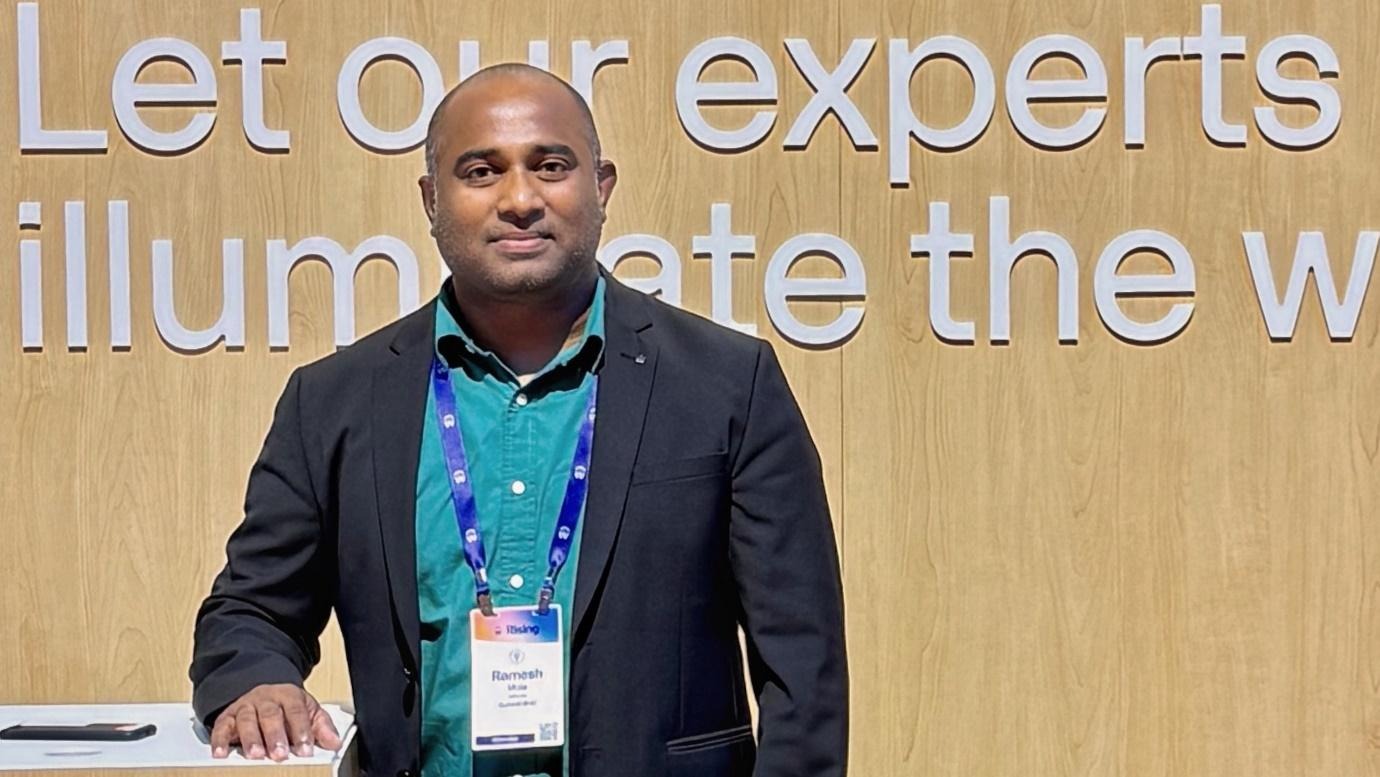
One of the leaders driving this change is Ramesh Mola, an HR technology expert who has helped organisations build smarter, employee-focused systems. He shared his insights on how automation and AI-driven self-service models empower global workforces and streamline operations. His work demonstrates how these tools can change the way people interact with HR. “True employee experience transformation comes from giving people control and context,” he says. “When systems serve employees—not the other way around—organizations see higher engagement, faster resolution, and measurable results.”


Discussing his work, he shared how at Summit Behavioral Healthcare, he led a major upgrade of the company’s HR systems to support a growing workforce. Using Workday, he introduced intelligent self-service tools that allowed employees and managers to complete routine HR tasks on their own, such as updating personal details, managing schedules, or finding HR policies. The result was a faster, more transparent system that reduced delays and improved overall satisfaction.
The impact of this work was clear. The new Workday Self-Service Portal, supported by AI-powered search and automated workflows, cut HR service requests by more than half. Average response times dropped from several days to less than one day, and employee satisfaction rose by 35%. By automating key processes, the company saved more than 6,000 work hours a year, an efficiency gain worth about $680,000 annually.
To make this possible, Mola led several key projects, including the rollout of a Workday chatbot to answer HR questions instantly, a DocuSign integration for faster contract handling, and automation between scheduling and HR systems to reduce errors. These changes helped create a smoother experience for both employees and managers, allowing HR teams to focus more on strategy and less on manual paperwork.
Still, the transition wasn’t simple. Many employees were initially unsure about relying on automation for personal or sensitive HR tasks. To build trust, the expert introduced workshops that explained how the new systems worked and why data privacy was a priority. He also ensured compliance with major regulations such as HIPAA, SOX, and GDPR, embedding security and accountability into each workflow.
Beyond his work at Summit, his ideas have influenced HR professionals globally. His published insights including, “AI-Driven Analytics Shift Global HR Teams From Data Management to Smarter Decisions” and “Driving Scalable HRIS Governance: Establishing Change Management SOPs in Enterprise Workday Environments” among others, focus on using AI and analytics to help HR teams make smarter, data-backed decisions. He also stresses the importance of combining automation with empathy, ensuring that technology supports people rather than replaces them.
Looking to the future, Mola believes that self-service will become even more intuitive. He expects to see AI tools that can predict employee needs, offer personalized guidance, and even support voice-based interactions. “Self-service will evolve into smart service,” he says. “Intelligent systems will not just answer questions, they’ll anticipate them.”
For the expert, the purpose of automation is simple, which is to make work better for people. “Automation has meaning only when it enhances human potential,” he says. “Intelligent self-service tools make that possible across every enterprise.”
When technology is designed to empower employees, not overwhelm them, the benefits reach everyone, from individual workers to the organization as a whole. The future of employee experience may be powered by automation, but it succeeds only when it keeps people at the center.