





















































The U.S. Securities and Exchange Commission (SEC) has significantly changed its approach to cryptocurrency regulation, marking a turning point for the industry.
The agency spent years developing enforcement-driven policies to define how different crypto activities — mining, staking, and airdrops — shall be treated under federal securities laws. The current system is moving toward greater regulatory clarity as it establishes specific rules to govern these activities.


For a long time, the SEC maintained that most assets in the crypto market should be treated as securities and relied primarily on enforcement actions to regulate digital assets. The approach created major business challenges, since companies needed to make sure their operations strictly followed securities regulations.
In its recent statements, the SEC explains that many digital assets do not meet the requirements for classification as securities, especially when they function as decentralized tools or commodities rather than investment contracts (SEC, 2026).
The primary driver of this transition is the establishment of an organized system, which defines types of digital assets. The SEC now distinguishes between categories such as digital commodities, utility tokens, stablecoins, collectibles (including NFTs), and digital securities. Among the beneficiaries of the SEC’s recent updates are, in particular, Ripple and its token XRP. Previously, the SEC sued the company, claiming that the token should be classified as a security, but now it is recognized as a digital commodity, easing the associated legal burden and potentially supporting XRP price.
This classification framework clearly distinguishes between assets that qualify as securities and those that do not, helping developers, investors, and platforms to operate with greater certainty. The SEC recognizes that not every token functions as an investment instrument, enabling it to develop regulations that better reflect real-world blockchain use cases.
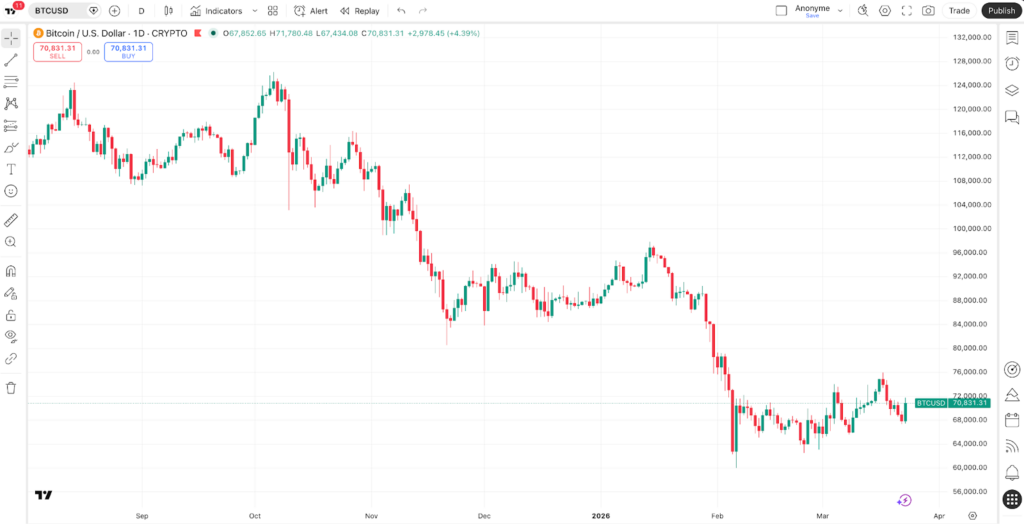
The updated framework provides a more comprehensive clarification of crypto mining activities. The SEC now views mining as a technical process that protects blockchain networks while confirming their operations rather than an investment activity. This is also consistent with the relative independence of Bitcoin price dynamics from mining activity.
Miners are compensated for providing computational power to the network, rather than deriving returns from the efforts of third parties. The distinction established by this rule eliminates a long-existing area of uncertainty by clarifying that mining activities fall outside the scope of the financial instruments regulations.
The SEC also provides clearer guidelines for staking operations. They now distinguish between decentralized and centralized staking services. In this new interpretation, native staking — where users lock tokens to help validate transactions — is no longer viewed as an investment contract, since rewards come from direct participation in network operations.
However, depending on how they are set up, centralized staking services may still come under scrutiny, particularly if they appear to be managed investment products. This nuanced approach is the result of lessons learned from previous enforcement cases.
Airdrops have also been addressed more explicitly. Tokens will no longer be regarded as securities transactions when they are given away for free without requiring payment or the expectation of profit from a third party.
The explanation offers the necessary information for early-stage projects that use token distribution as a means of establishing network participation. The framework limits developers’ legal exposure while maintaining that fundraising activities with profit expectations must comply with securities regulations.
Another important development is the recognition that a token’s legal status can evolve over time. A digital asset that starts as a fundraising security could become a non-security once its network reaches sufficient decentralization. This concept introduces flexibility into the regulatory framework and acknowledges the lifecycle of blockchain projects.
The SEC has changed its enforcement approach by introducing new guidelines, replacing its previous practice of pursuing all violations. The new framework seems to be a better legal definition for crypto operations that involve capital raising and profit expectations. Yet, those activities remain subject to securities regulations.
The crypto industry will certainly benefit from this regulatory change, as it will create new innovative opportunities while establishing legal stability that enables sustainable business expansion within a clearer rule framework.

David Prior
David Prior is the editor of Today News, responsible for the overall editorial strategy. He is an NCTJ-qualified journalist with over 20 years’ experience, and is also editor of the award-winning hyperlocal news title Altrincham Today. His LinkedIn profile is here.