![Best ReactJS Companies in Poland for Scale-Ups [2026 Review]](https://todaynews.co.uk/wp-content/uploads/2026/04/Man-Data-Coding-360x180.jpg)























![5 Best CFD Brokers for Beginners [UK, 2026]](https://todaynews.co.uk/wp-content/uploads/2026/03/Invest-360x180.jpg)





























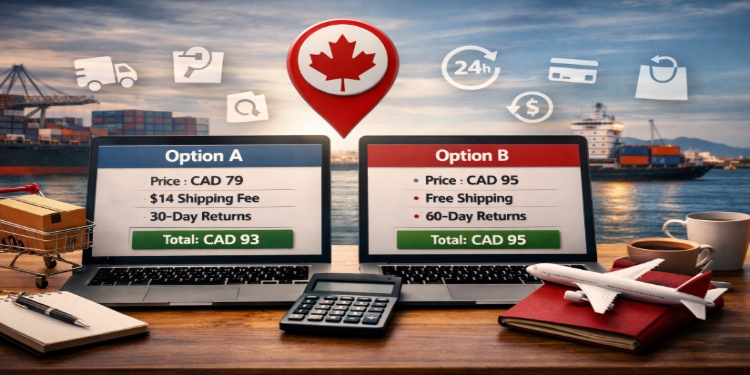
Canadian buyers rarely act on the first offer they see. Instead, they compare price, delivery, returns, and added value before they pay. That habit shapes how online stores present deals, especially in a market with long shipping routes and different provincial taxes. As a result, side-by-side comparison has become a practical sales tool, not just a design choice.
Why Side-By-Side Comparison Matters in Canadian E-commerce
For many Canadian online buyers, the first price is only part of the picture. The final amount often rises after shipping, taxes, or return costs come into view. As a result, stores that present those details early make decision-making easier. An item priced at CAD 79 may appear to offer better value, but a CAD 14 delivery charge can remove that lead.


This matters even more in a country where distance affects fulfillment costs. A buyer in Toronto may see faster and cheaper delivery than a buyer in Halifax or Whitehorse. Delivery timing can also vary between major cities and remote areas. As a result, shipping terms often carry as much weight as the item price itself.
Clear comparison also reduces friction at checkout. If one store shows free delivery from CAD 100, while another hides that rule until the last step, trust shifts quickly. Likewise, a visible 30-day return window is easier to value than a vague promise, especially when buyers review shipping costs across Canada before placing an order. Buyers respond well when terms are easy to scan and compare.
Where Offer Comparison Has Special Value
Some categories need a more careful comparison because the terms influence the final outcome more directly. Travel offers, subscription bundles, and finance products fit this pattern well. In these cases, small details can change the total value quite clearly. That is why buyers often place several offers side by side before they commit.
That habit also appears in online casino markets, where users may compare bonus offers side by side before they choose a brand. In this category, the headline number tells only part of the story. Deposit rules, time limits, payment options, and wagering terms all shape the real offer. That is why CasinosAnalyzer can attract attention from users who want a faster first check.
The same logic applies across sectors. A shopper comparing free shipping thresholds uses the same mindset as someone reviewing casino bonuses. In both cases, the visible headline matters less than the full terms. Consequently, brands that organize details clearly are easier to trust.
What Buyers Usually Check First
Before making a decision, buyers tend to look for a short set of practical details. They want to know what they will pay, what they will receive, and what limits apply. When that information is grouped well, comparison takes less time:
- Final price after fees or taxes.
- Delivery speed and shipping threshold.
- Return window and refund process.
- Payment methods and any limits.
- Time-sensitive conditions on the offer.
Once these points are visible, the offer becomes easier to judge with less effort. Buyers can compare one option against another without opening several extra pages. They do not need long explanations at that stage. They need clear facts that support a quick comparison.
What Makes Digital Offers Easier to Evaluate
Presentation matters because most people scan before they read closely. A page with one clear offer table can do more work than five long blocks of text. For example, a buyer can compare CAD 10 off, free shipping, and a loyalty credit in seconds if each option is listed in one row. That format lowers confusion and helps the strongest offer stand out.
Labels also need to describe value in plain terms. “Save CAD 12 today” is more useful than “special seasonal deal” because the benefit is visible at once. The same rule applies in sectors that use online casino promotions, where casino bonuses often look similar until the conditions appear. So, clearer wording gives buyers a better basis for action.
Another important point is consistency. If the product page says one thing, the cart should not say another. A free return promise should match the policy page and the checkout summary. Otherwise, buyers may leave even when the deal itself is good.
Signals That Reduce Buyer Hesitation
Trust rises when the same information appears in the same place each time. Buyers do not want to search across five tabs for one missing condition. So, the strongest pages guide them through the offer in a simple order:
- Show the final price near the main call to action.
- Place delivery timing next to the shipping cost.
- State return rules in one short block.
- Highlight payment limits before checkout begins.
- Repeat key terms in the cart summary.
This sequence helps the buyer confirm value without extra effort. It also lowers the chance of surprise at the payment step. In commercial terms, that can protect conversion quality and reduce abandoned carts.
How Canadian Brands Build Trust With Clearer Terms
Trust grows when buyers feel that nothing important is hidden. In Canada, that often means showing tax, shipping, and delivery timing before the last click. A store that lists “CAD 89 plus applicable tax and free shipping over CAD 100” gives a clearer picture than one that delays those facts. As a result, buyers can compare one seller against another with less guesswork.
Clear rules also support repeat business. A first-time customer may focus on price, yet a returning customer often remembers how easy the first order felt. If the return process was visible and the checkout matched the offer, confidence rises. That same principle can apply in other categories, including online casino pages, where the value of the offer depends on readable conditions.
The language matters as much as the layout. Short phrases usually work better than dense legal copy on sales pages. Buyers do not need every rule at once, yet they do need access to the main limits before they pay. Therefore, the best offer pages summarize key points first and place fuller terms one click away.
Why Better Comparison Design Supports Long-Term Growth
Side-by-side comparison helps businesses because it matches how people already buy online. Canadian customers compare options across stores, devices, and sessions before they decide. A brand that supports that process can hold attention longer and reduce doubt. In contrast, a brand that hides details may lose the sale, even with a lower base price.
This applies to more than retail. Subscription services, travel deals, and even pages covering casino bonuses work better with the same format. Buyers want to compare value, terms, and timing in one place. As a result, a clear presentation can support both short-term sales and long-term trust.
In the end, comparison is not only a buyer habit. It is also a business opportunity. When Canadian brands present terms clearly, they make decision-making easier and reduce avoidable friction. That is why side-by-side offer design now plays a central role in online market performance.

David Prior
David Prior is the editor of Today News, responsible for the overall editorial strategy. He is an NCTJ-qualified journalist with over 20 years’ experience, and is also editor of the award-winning hyperlocal news title Altrincham Today. His LinkedIn profile is here.
















![Best ReactJS Companies in Poland for Scale-Ups [2026 Review]](https://todaynews.co.uk/wp-content/uploads/2026/04/Man-Data-Coding-120x86.jpg)