






















![5 Best CFD Brokers for Beginners [UK, 2026]](https://todaynews.co.uk/wp-content/uploads/2026/03/Invest-360x180.jpg)




























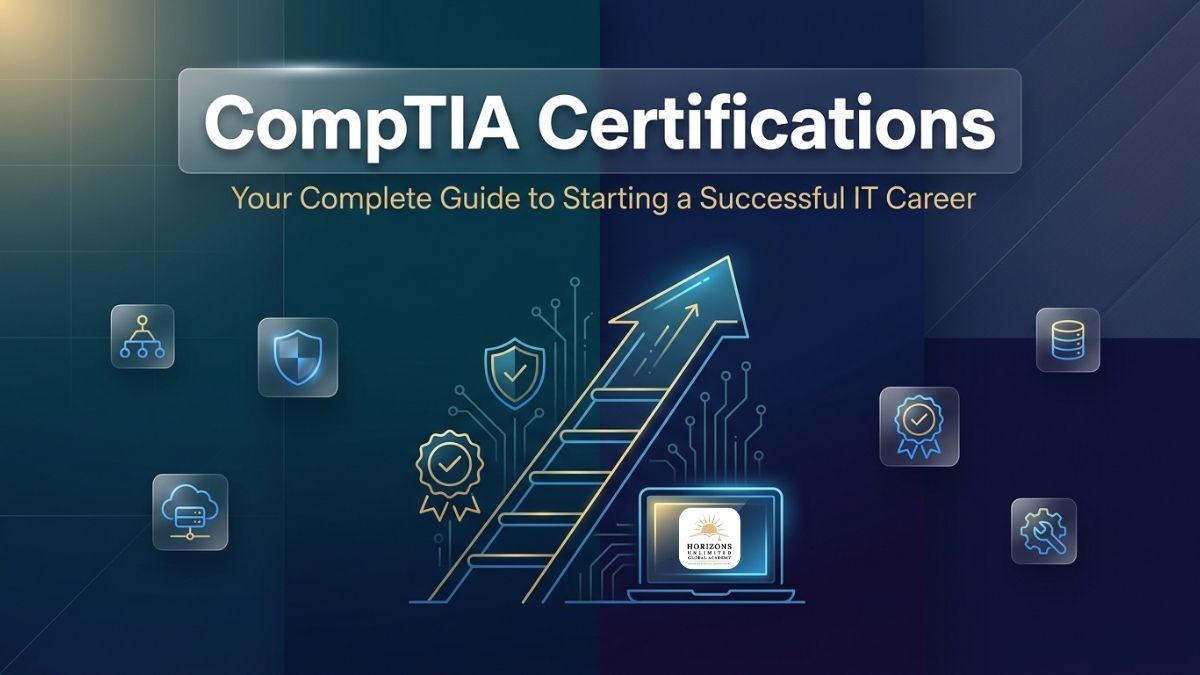
In the modern IT landscape, certifications are crucial for validating technical skills, enhancing career prospects, and demonstrating professional credibility. Among the most respected entry-level and intermediate credentials are CompTIA A+, Network+, and Security+. These certifications serve as benchmarks for foundational knowledge, networking expertise, and cybersecurity skills, respectively. They equip professionals to meet the growing demand for qualified IT specialists capable of managing infrastructure, securing digital assets, and ensuring seamless technology operations. Many candidates rely on trusted study resources such as Exam-Labs, which provide practice exams and learning materials aligned with real-world scenarios to enhance preparation and confidence.
CompTIA A+: Building a Strong IT Foundation
CompTIA A+ is widely regarded as the starting point for IT professionals. This certification validates essential skills required for troubleshooting, managing, and maintaining computer systems and devices. It covers hardware, software, operating systems, networking basics, mobile devices, and IT operational procedures.


By earning the A+ credential, candidates gain practical skills in installing and configuring operating systems, managing peripheral devices, and performing preventive maintenance. They also learn troubleshooting techniques for software and hardware issues, which are critical for roles such as IT support specialist, help desk technician, and desktop support analyst. The certification emphasizes problem-solving, critical thinking, and customer service skills, which are indispensable in real-world IT environments.
A+ certification is often the first step toward more specialized credentials like Network+ or Security+. It provides the technical foundation and confidence necessary to explore more complex domains within IT.
CompTIA Network+: Advancing Networking Knowledge
Building on the fundamentals established in A+, CompTIA Network+ focuses on networking concepts and infrastructure management. This certification is designed for professionals responsible for installing, configuring, managing, and troubleshooting network devices. Key topics include network protocols, IP addressing, routing and switching, network security, and wireless networking.
Network+ certified professionals are equipped to design and implement efficient networks, maintain network performance, and troubleshoot connectivity issues. The exam emphasizes practical skills needed to manage network operations across LANs, WANs, and cloud-integrated environments. Career paths for Network+ holders include network administrator, systems administrator, and IT operations specialist roles.
Achieving Network+ certification demonstrates not only technical expertise but also a solid understanding of network infrastructure’s strategic importance. Professionals who combine A+ and Network+ certifications are better prepared to handle diverse IT responsibilities, from device management to network optimization.
Learn more: https://www.exam-labs.com/certification/CompTIA-Network-plus
CompTIA Security+: Securing Digital Environments
In an era of increasing cyber threats, CompTIA Security+ certification is essential for IT professionals seeking expertise in cybersecurity fundamentals. Security+ validates skills required to protect networks, systems, and data from unauthorized access, breaches, and vulnerabilities. The certification covers threat management, cryptography, identity management, risk mitigation, compliance, and security architecture.
Security+ prepares candidates to implement security policies, monitor networks for anomalies, and respond to incidents effectively. Professionals gain knowledge in access control, network security protocols, risk assessment, and mitigation strategies. Career opportunities include security analyst, cybersecurity consultant, and information security administrator roles.
With the growing complexity of IT environments, Security+ certified professionals are in high demand across industries such as finance, healthcare, government, and technology. This credential is also a stepping stone toward advanced certifications like CISSP, CISM, or CompTIA Cybersecurity Analyst (CySA+), enabling professionals to specialize further in cybersecurity domains.
See more: https://www.exam-labs.com/certification/CompTIA-Security-plus
Integrating Certifications for Career Growth
Earning CompTIA A+, Network+, and Security+ certifications provides a comprehensive skill set that spans IT support, networking, and cybersecurity. These credentials allow professionals to manage end-to-end technology operations, ensure network reliability, and protect organizational data from evolving threats. Employers highly value candidates who demonstrate a well-rounded knowledge base, practical experience, and the ability to troubleshoot complex issues.
The progression from A+ to Network+ to Security+ aligns with natural career development, allowing professionals to build confidence and competence gradually. Combining these certifications positions candidates for diverse IT roles and increases eligibility for higher-level responsibilities and leadership positions.
Preparation Strategies for CompTIA Exams
Effective preparation for CompTIA certifications involves a combination of theoretical study and hands-on practice. Candidates should review official exam objectives, utilize practice labs, and engage with simulation tools that mimic real-world scenarios. Practice tests allow learners to identify knowledge gaps, assess readiness, and refine time management skills for the exam.
Hands-on experience is essential, particularly for Network+ and Security+ exams. Configuring network devices, implementing security measures, and troubleshooting simulated IT problems provide practical insights that reinforce learning. Group study sessions, online forums, and peer discussions enhance understanding and provide exposure to diverse problem-solving approaches. Consistent practice and structured study schedules are key to achieving success across all three certification exams.
Frequently Asked Questions
What is the recommended order for taking these CompTIA certifications?
It is generally advised to start with A+ to build foundational skills, followed by Network+ to enhance networking knowledge, and then Security+ to specialize in cybersecurity.
Can beginners pursue Security+ directly?
Security+ is best approached after foundational knowledge in IT and networking, such as that provided by A+ and Network+ certifications.
How long is each certification valid?
CompTIA certifications are valid for three years, after which renewal or continuing education is required to maintain active status.
Do these certifications help in salary advancement?
Yes, certified professionals typically have higher earning potential and are more competitive in the job market compared to non-certified peers.
Are these certifications recognized globally?
Yes, CompTIA certifications are internationally recognized and respected by employers across various industries.
Conclusion
CompTIA A+, Network+, and Security+ certifications provide a structured pathway for IT professionals to acquire comprehensive technical skills, from device troubleshooting to network management and cybersecurity. A+ establishes a strong foundation in hardware, software, and operational procedures, enabling professionals to address everyday IT challenges. Network+ builds on this knowledge by equipping candidates with the skills to design, manage, and troubleshoot network infrastructures effectively. Security+ adds an essential layer of expertise in protecting networks, systems, and data against evolving cyber threats.
By pursuing these certifications, IT professionals enhance their employability, demonstrate practical competence, and increase career advancement opportunities. Preparation strategies that combine theoretical learning, hands-on labs, and practice exams from resources like Exam-Labs.com help candidates gain confidence and mastery over exam objectives. Together, these certifications provide a well-rounded portfolio that supports diverse IT roles and opens doors to higher-level positions, leadership opportunities, and specialized cybersecurity careers. Embracing these credentials empowers individuals to stay relevant in the fast-paced IT industry and contribute meaningfully to organizational success while fostering continuous professional growth.