




















![5 Best CFD Brokers for Beginners [UK, 2026]](https://todaynews.co.uk/wp-content/uploads/2026/03/Invest-360x180.jpg)
































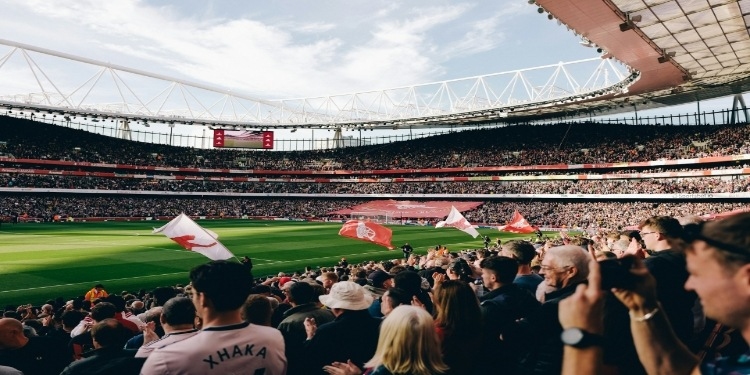
The Premier League often appears predictable, with form guides, statistics, and narratives shaping expectations. That surface clarity hides a deeper reality shaped by variance, timing, and small margins. Outcomes shift quickly, while confidence in predictions often stretches beyond what the game can truly support.
A single-player narrative and the shifting odds
Rasmus Højlund’s career arc reflects how quickly perception can swing in elite football. His early spell at Manchester United showed promise, but his second season raised doubts about his impact. A loan move to Napoli changed that view again, as goals returned and performances improved.


Discussion around his future has already reopened, with voices inside the game suggesting a second chance at Old Trafford. This kind of striker return talk shows how quickly a few strong performances can change opinion, even when the bigger picture remains the same. Recent results often shape belief more than long-term consistency.
Such cycles reveal how quickly a player can move from discarded asset to renewed option. Football rarely follows a straight path, so evaluation requires patience across longer stretches.
The myth of predictability in weekly results
Every matchweek produces a set of outcomes that appear logical once the final whistle sounds. Analysts build narratives around tactics, mentality, and execution, while underlying randomness remains active in every phase of play. A deflected shot, a marginal offside call, or a refereeing decision can shape an entire result.
Short sequences of wins create an illusion of control, while losses invite sweeping conclusions about decline. These patterns often reflect apophenia, where clusters of results appear meaningful despite limited data. Over a long season, regression tends to pull performances toward a broader average.
Teams that dominate expected goals can still lose matches, while less effective sides secure points through efficiency. That contrast exposes the gap between performance data and final outcomes. Certainty fades when the game unfolds across ninety minutes of unpredictable events.
League tables and the distortion of strength
League positions create a strong sense of hierarchy, yet they capture only a snapshot in time. Manchester United are fourth with 45 points, while Chelsea follow closely on 44 and Liverpool on 42. That narrow gap shows how quickly positions can shift with a single result.
This distortion grows sharper during congested fixtures, when fatigue, injuries, and rotation influence results. Brentford, for instance, sit within reach of the top four despite fewer resources, while Sunderland remain close after promotion. A single win can move a team several places, which reshapes perception almost instantly.
Underlying performance often tells a different story. Liverpool have dominated possession and expected goals in certain matches, yet dropped points due to finishing and defensive lapses. Chelsea have led games comfortably, yet surrendered 17 points from winning positions, which highlights how outcomes diverge from control.
The table reflects results, while deeper metrics reveal how those results were produced. Certainty fades when both layers are considered together, especially in a season where margins remain tight across multiple positions.
Managerial changes and sudden narrative shifts
Coaching changes bring immediate shifts in perception, especially when early results align with optimism. A new manager can deliver quick improvements through tactical clarity or emotional response within the squad. That initial surge often strengthens belief in a lasting transformation.
Sustained performance requires consistency across many variables, including squad depth, fitness, and opposition quality. Early wins can mask structural issues that reappear over time. Pressure builds again when results drift away from that initial bounce.
This cycle reinforces the illusion of certainty, as each managerial change invites fresh expectations. The league rewards sustained execution, while narratives often favour short bursts of success. Stability emerges over time, though public perception rarely waits that long.
The final piece fallacy in squad building
Transfer activity often carries the belief that a single signing can complete a team. Clubs invest heavily in forwards, midfielders, or defenders with the expectation of immediate transformation. That belief simplifies a complex system into one decisive addition.
Team performance depends on structure, cohesion, and tactical alignment across the entire squad. A new player may improve certain aspects, though systemic weaknesses can still limit overall output. Results rarely shift in isolation.
This pattern mirrors the search for certainty, where one decision appears capable of resolving deeper issues. Football operates through interconnected parts, so success emerges from balance across multiple areas. Expectations often move faster than that process allows.
A league defined by shifting outcomes
The Premier League continues to resist fixed narratives, even as data and analysis grow in influence. Strong teams lose matches they appear likely to win, while underdogs secure unexpected results. Each game carries variables that resist full control.
Confidence in predictions rises through statistics and form, though outcomes remain sensitive to small events. The illusion of certainty persists because structure offers comfort, even when the game resists that structure. Football unfolds through a blend of skill, timing, and chance, ensuring that certainty remains elusive throughout an entire season.