
















![5 Best CFD Brokers for Beginners [UK, 2026]](https://todaynews.co.uk/wp-content/uploads/2026/03/Invest-360x180.jpg)
































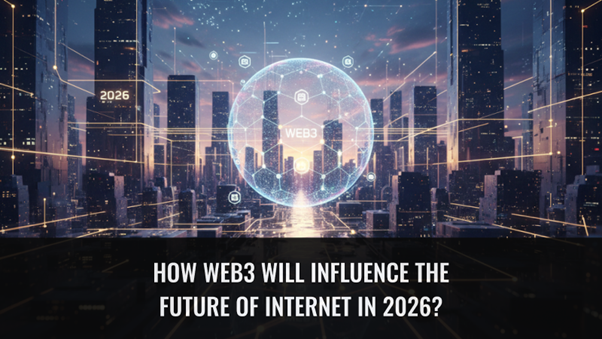
The internet is entering one of its most defining transformations since its creation. For years, users have relied on centralized platforms to communicate, trade, and build digital identities often at the cost of privacy, ownership, and control. As we move toward 2026, Web3 is emerging as a powerful alternative, reshaping how the internet is built and who truly benefits from it. Powered by blockchain, decentralization, and cryptographic trust, Web3 promises an internet where users own their data, creators capture real value, and digital systems operate transparently. This shift is not just technical it represents a fundamental change in how we experience, govern, and participate in the digital world.
The Web3 Vision: Power Shifts Back to Users
Web3 represents a structural shift away from centralized control toward decentralized networks owned and governed by their participants. Instead of platforms acting as gatekeepers, Web3 applications operate on distributed ledgers where rules are enforced by code rather than corporations. This transformation reduces dependency on single authorities and introduces a trust model based on transparency and cryptography.


By 2026, this vision is becoming more concrete. Users increasingly expect control over their data, freedom from platform lock-in, and fair participation in the value they help create. Web3 aligns with these expectations by enabling systems where ownership and governance are shared rather than concentrated. Companies offering Blockchain and Web3 development solutions are playing a key role in building these decentralized, user-first platforms.
How Is Decentralized Finance Redefining the Financial Layer of the Internet?
Among the most obvious effects of Web3 is the financial sphere. Decentralized Finance or DeFi recreates the role of traditional financial services like lending, borrowing, payments and trading through smart contracts, not intermediaries. This eliminates friction, reduces costs and access to global financial tools.
By the coming year decentralized finance platforms will be more stable, compliant and easier to use. Interfaces are less complicated, onboarding is easier, and it is getting more integrated with traditional finance. Consequently, DeFi is no longer restricted to crypto-native users, but it is slowly shaping the way digital payments and other financial services are conducted throughout the internet.
How Is Digital Ownership Expanding Beyond NFTs and Collectibles?
One of the strongest contributions that Web3 has brought to the future internet is digital ownership. Web3 allows users to own digital assets by using blockchain records, not by platforms like Web2, which own and control digital assets.
Although NFTs were first acknowledged by digital art, they have expanded to be very useful. Virtual real estate, in-game economies, memberships, licenses, and digital credentials are all enabled by tokenized assets. This change enables freedom of assets to be transferred between platforms and ecosystems, enabling users to gain long-term value rather than short-term access.
How Does Self-Sovereign Identity Give Users Control Over Personal Data?
One of Web2’s biggest flaws is centralized identity management. Your email login, social media account, and personal information are owned by platforms that can control or revoke access at any time.
- You decide who sees your information.
- Your digital identity is portable across services.
- Identity becomes safer and less vulnerable.
This shift is pivotal and no longer will your DID (Decentralized Identity) live behind corporate authentication systems instead, identities are verifiable, user-controlled, and resistant to centralized failure.
Decentralized Applications and New Digital Experiences
The functional layer of Web3 is called decentralized applications or dApps. These apps run through blockchain networks instead of centralized servers, which guarantees transparency, resiliency, and ownership to users.
DApps are expanding across industries, such as social media, games, markets, and productivity applications. Social platforms directly reward creators, games enable ownership of real assets and marketplaces are run with low fees. As complexity is abstracted away, dApps are becoming increasingly accessible to mainstream users.
Can AI Make the Internet Truly Autonomous with Web3?
Web3 and artificial intelligence are coming together to form an agentic internet. This is an internet that can act, optimize, and make decisions on its own. Inside decentralized networks, AI agents can run smart contracts, manage digital assets, and adjust systems without constant human input. This shifts the internet from a passive tool to an active system that can learn, adapt, and manage itself. The result is digital experiences that are faster, more responsive, and more reliable for users.
AI-powered Web3 systems are already improving decentralized finance, governance, and infrastructure management. AI can rebalance DeFi portfolios automatically, suggest changes within decentralized organizations, and track network performance in real time. Blockchain adds transparency and accountability by recording every action on-chain. Each decision can be verified and audited. Together, AI and Web3 enable automation without losing trust, creating an internet that is self-regulating and built around user and community control.
Infrastructure Evolution: Scalability and Interoperability
For Web3 to support global adoption, its infrastructure must scale efficiently. Significant progress is being made through layer-2 solutions, modular blockchain architectures, and cross-chain interoperability.
The users can move assets and data across multiple blockchains seamlessly. Decentralized storage and computing solutions further reduce reliance on centralized servers, strengthening the resilience and openness of the internet’s foundation. This infrastructure shift is accelerating the adoption of enterprise-grade Web3 and blockchain services across finance, governance, and digital platforms.
Tokenized Economies and Community Governance
Web3 introduces economic models that compensate participation as opposed to passive use. Tokens are a form of value, ownership and governance, and allow communities to collectively run platforms using decentralized autonomous organizations.
Such structures encourage transparency, align incentives and allocate value in a more equitably. Community-governed platforms will become a viable alternative to the traditional corporate, particularly in the service of digital and online collaboration.
Privacy, Security, and Trust by Design
Privacy and security are built into Web3 systems from the ground up. Cryptographic mechanisms protect data, while transparent ledgers ensure accountability. Advanced techniques allow verification without exposing sensitive information.
As digital trust continues to erode in centralized systems, Web3’s architecture offers a compelling alternative one where users can interact, transact, and share information with greater confidence and control.
Challenges on the Path to Mass Adoption
While Web3 is rapidly evolving, several hurdles must be addressed before it becomes mainstream. From usability issues to regulatory uncertainty, these challenges shape the pace at which decentralized technologies can gain widespread adoption. Understanding these obstacles is crucial to seeing how Web3 will mature in the coming years.
1. User Experience (UX) Barriers
Interacting with Web3 applications can still be complex and intimidating for everyday users. Wallet management, private keys, and blockchain transactions create friction that slows adoption.
Many users find even simple actions, like sending tokens or using decentralized apps, confusing. Simplifying interfaces without compromising decentralization is critical to attracting non-technical users.
2. Regulatory Uncertainty
Governments and regulators are still defining rules for cryptocurrencies, DeFi platforms, and tokenized assets. Without clear legal frameworks, projects face compliance risks and uncertainty.
Ambiguous regulations can deter both developers and investors, slowing growth. Establishing transparent policies is essential to create trust and stability in the ecosystem.
3. Security Risks
Smart contracts and decentralized protocols, while powerful, can be vulnerable to hacks and exploits. Users may also fall victim to phishing attacks or mismanage private keys.
Continuous auditing, robust security protocols, and user education are necessary to mitigate risks and build confidence in Web3 platforms. Safety is a key factor for mainstream adoption.
4. Scalability and Infrastructure Challenges
Early blockchain networks can struggle with transaction speed and network congestion, limiting practical use for large-scale applications.
While layer-2 solutions and cross-chain interoperability are improving performance, more robust infrastructure is needed. Scalable and seamless systems will determine how well Web3 supports millions of users.
5. Education and Awareness
A lack of understanding about blockchain, decentralization, and token economies prevents many potential users from engaging with Web3.
Comprehensive education, intuitive tools, and clear communication about its benefits are crucial. Increasing awareness will empower users to participate fully in decentralized ecosystems.
Conclusion
Web3 is reshaping the internet from the ground up. It is redefining ownership, decentralizing power, and enabling new economic and social models. The shift goes beyond technology, it represents a transformation in how value is created, distributed, and governed. Users are moving from passive participants to empowered stakeholders with control over their data, digital assets, and online interactions. Communities and creators are now able to benefit directly from their contributions, fostering innovation and collaboration on a global scale. While challenges remain in adoption, scalability, and regulation, the trajectory is clear. The internet is becoming more open, inclusive, and transparent. Web3 is not merely a replacement of existing systems, it is a reimagined internet, built for a future where every participant can own, govern, and thrive in the digital world.















![5 Best CFD Brokers for Beginners [UK, 2026]](https://todaynews.co.uk/wp-content/uploads/2026/03/Invest-120x86.jpg)